Halifax Real Estate Warning: The “Approved Subject to Appraisal” Trap Explained
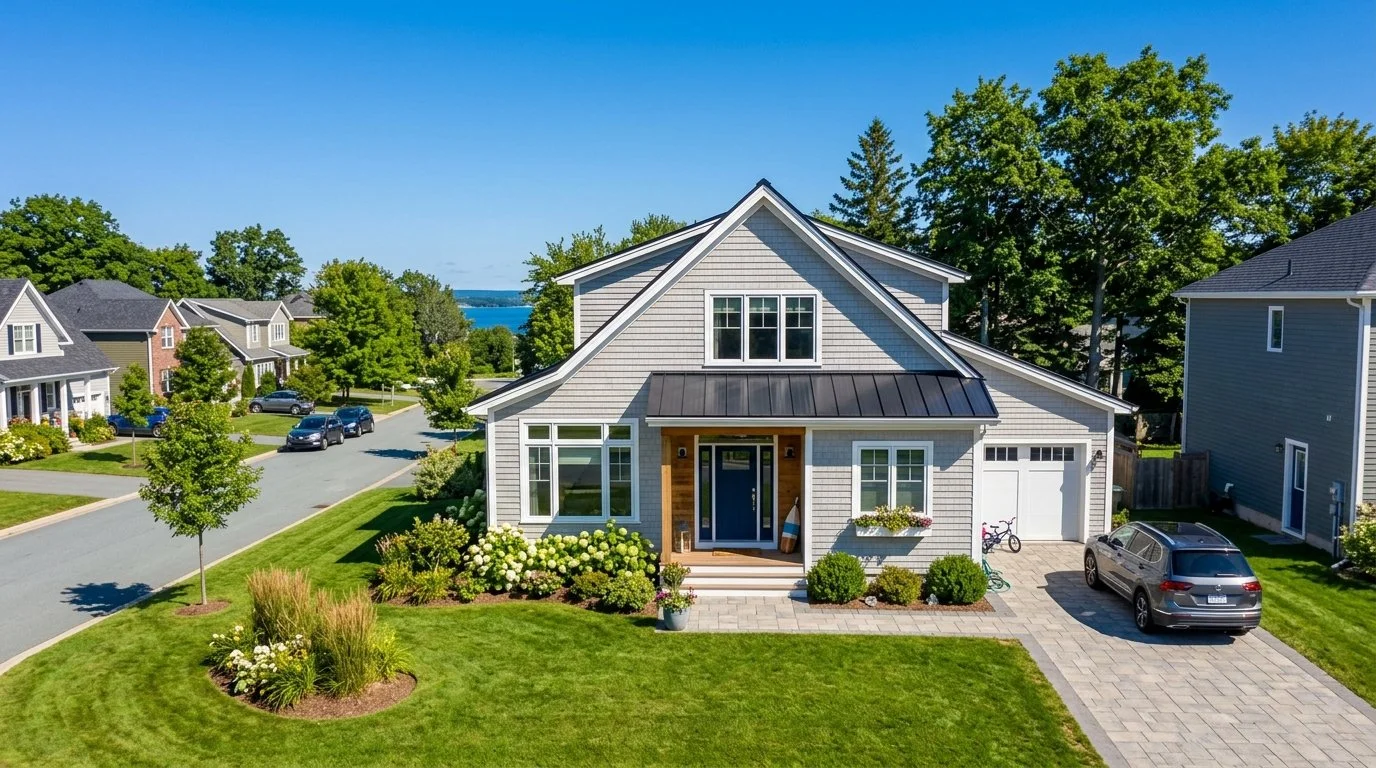
Buying a home in Halifax, Dartmouth, or Bedford? Learn why 'approved subject to appraisal' isn't a full mortgage approval and how to avoid high-risk financing mistakes.
Imagine this: You’ve been hunting for a home in the Halifax Regional Municipality (HRM) for months. You finally find a house you love in Dartmouth, put in an offer, and after some back-and-forth, the seller accepts. You send the paperwork to your mortgage broker, and a couple of days later you get an email:
“Great news! You’re conditionally approved, subject to a routine appraisal.”
You look at your conditional period deadline on your Agreement of Purchase and Sale. It’s coming up fast. You want to make sure the deal stays firm, so you sign Form 408 (the Buyer Waiver of Conditions form in Nova Scotia) and hand over your deposit. You start packing boxes.
Two weeks before closing, you get a panicked phone call from your lender. The appraisal report just came back, and the home was valued $40,000 below what you agreed to pay.
Because of that low valuation, the bank reduces your mortgage loan, and you suddenly have five business days to bring an extra $32,000 in liquid cash to your real estate lawyer’s office, or risk forfeiting your deposit and getting sued.
Waiving your financing condition too early is one of the single most expensive mistakes a home buyer can make in Nova Scotia. Here is how property appraisals actually work in Halifax, why an approval “subject to appraisal” is not a complete mortgage approval, and how you can protect your money.
Mortgage Approval vs. Property Approval: Knowing the Difference
To understand why appraisal shortfalls happen, you need to understand how Canadian mortgage lenders evaluate risk. When you submit an application, a lender makes two entirely separate decisions:
Borrower Approval (You): The lender reviews your income, employment history, credit score, debt ratios, and down payment source. If your financial profile is healthy, you receive a pre-approval or conditional personal approval.
Property Approval (The House): The lender evaluates the physical asset being bought.
When a mortgage is issued, the property serves as financial collateral. If a borrower defaults on payments, the bank must foreclose and sell the home to recover the loan balance. Because of this, lenders will never lend money based strictly on what you agreed to pay. They only lend based on what the property is worth on the open market today.
To determine fair market value, the lender hires a licensed, independent appraiser. In Halifax, Dartmouth, and Bedford, the appraiser analyzes recent sales of similar homes (“comparables” or “comps”) in the immediate neighborhood over the past three to six months. They adjust for square footage, lot size, finishes, age, and overall condition to arrive at an official appraised value.
The Core Rule of Mortgage Financing:
A mortgage lender will always base their maximum loan percentage on whichever number is lower: the agreed purchase price or the appraised fair market value.

Split graphic comparing mortgage borrower approval in an office with a home property appraisal inspection in Halifax Nova Scotia.
The Appraisal Gap Math: How a $40,000 Gap Costs You $32,000 in Cash
Let’s look at how this math plays out in real life with a standard Halifax home purchase.
Suppose you find a detached home in Bedford listed for $575,000. The market is active, so you offer $600,000, and the seller accepts. You plan to put down 20%, which breaks down as:
Agreed Purchase Price: $600,000
Planned Down Payment (20%): $120,000
Mortgage Amount Needed: $480,000
Feeling confident after receiving your conditional approval email, you submit Form 408 to waive your financing condition.
A week later, the appraiser completes their report. They look at recent Bedford sales comps and observe that values have leveled off at $560,000. The appraisal report comes back at $560,000, creating a $40,000 appraisal gap.
Here is how the bank recalculates your loan:
Maximum Loan = 80% x Appraised Value ($560,000) = $448,000
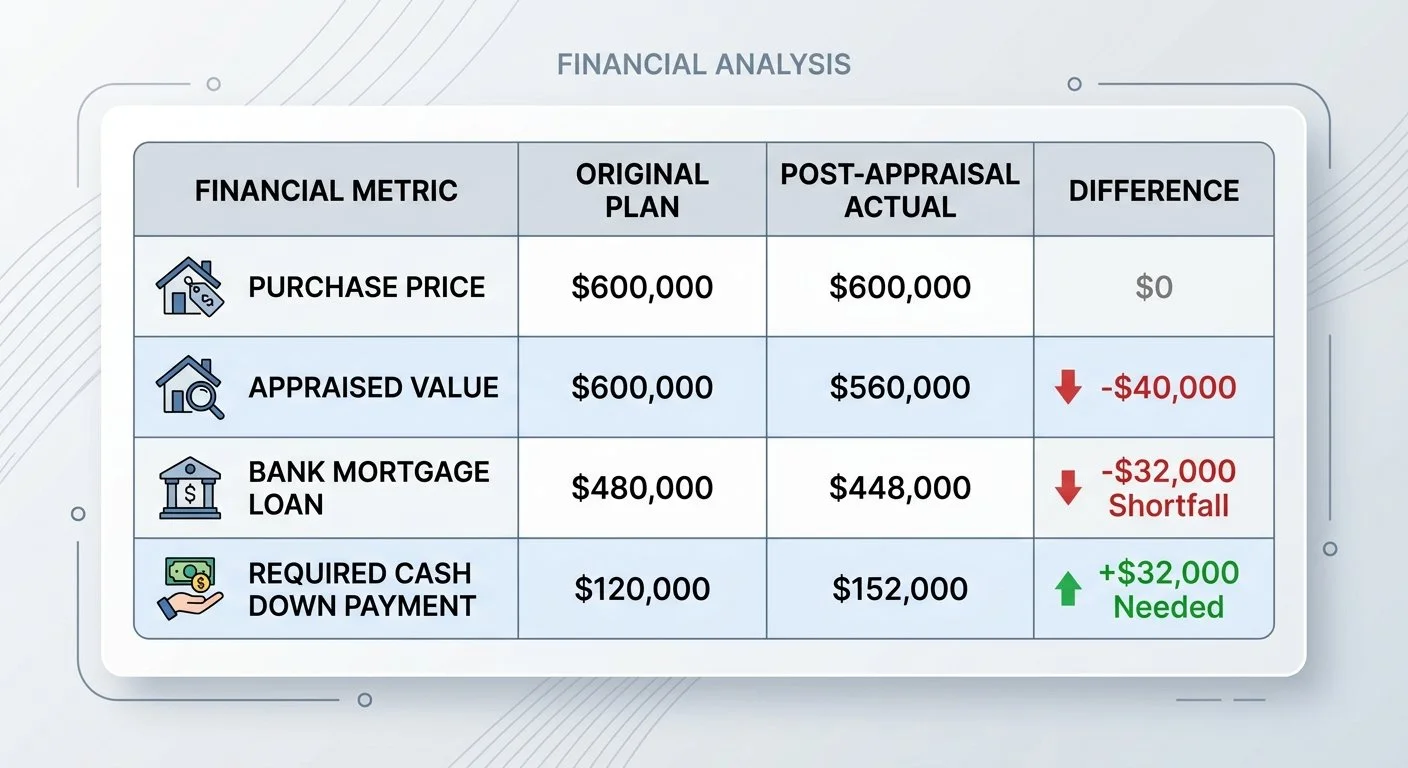
A clear visual comparison of how a low home appraisal in Halifax creates a $32,000 cash shortfall by reducing the lender's mortgage loan from $480,000 to $448,000.
Because you committed to paying the seller $600,000 in a legally binding contract, that missing $32,000 does not disappear. Your required cash on hand instantly jumps from $120,000 to $152,000 before closing day.
The Legal and Financial Dangers of Waiving Financing Early
In Nova Scotia, once you submit Form 408 (Buyer Waiver of Conditions) to the seller or seller's agent, your contract becomes firm and legally binding. If an appraisal gap occurs after you’ve waived conditions and you do not have extra cash, three dangerous scenarios can happen:
Forfeiting Your Earnest Deposit: If you fail to close the deal, the seller will move to retain your deposit. In the Halifax market, deposits typically range from $5,000 to $25,000 or more.
Legal Action for Damages: Under Nova Scotia contract law, if you default on a firm purchase agreement, the seller can re-list the property. If it subsequently sells for less, say, $550,000, the seller can sue you in court for the $50,000 price difference, plus legal fees, mortgage carrying costs, and property taxes.
High-Cost Emergency Debt: Buyers without liquid reserves are often forced to secure second mortgages or private high-interest loans (often at double-digit interest rates) just to satisfy closing requirements.
4 Practical Strategies for Halifax Home Buyers
To protect yourself when navigating home purchases in Nova Scotia, implement these four best practices:
Align Condition Timelines with Local Appraisal Turnarounds: Standard 5-day financing clauses may not provide enough time if local appraisers face backlogs. Ensure your REALTOR® includes enough business days in Clause 4 of your Agreement of Purchase and Sale for the appraisal report to be completed before your condition deadline.
Require Written Lender Confirmation Before Signing Form 408: Never waive your financing condition based on a phone call or a standard pre-approval letter. Ask your mortgage broker directly: "Has the lender reviewed and accepted the appraisal for this property address?" Only sign Form 408 once you hold an unconditional commitment letter or written clearance.
Maintain an Appraisal Gap Reserve: If you are offering above asking price or bidding on a property in an area with few recent comparable sales, keep liquid funds aside in high-interest savings or accessible accounts beyond your baseline down payment and closing costs.
Inquire About Automated Valuation Models (AVMs): In certain circumstances, lenders utilize automated valuation software rather than scheduling an in-person physical appraisal. Ask your mortgage specialist early on whether your offer qualifies for an automated property approval or requires a full physical inspection.
A clear definition graphic explaining property appraisals and fair market value assessments in residential real estate financing.
Frequently Asked Questions
1. What does "approved subject to appraisal" mean when buying a home in Halifax?
"Approved subject to appraisal" means a mortgage lender has approved your personal financial qualifications (income, credit, debt ratios), but final approval depends on an independent property appraisal verifying that the home’s fair market value matches or exceeds your purchase price.
2. What happens if a home appraisal comes in lower than the purchase price in Nova Scotia?
If an appraisal comes in low, the lender will calculate your maximum loan percentage using the lower appraised value instead of the purchase price. The buyer must cover the resulting funding gap out of pocket by increasing their cash down payment, renegotiating the price with the seller (if conditions are still active), or securing secondary financing.
3. Can a buyer back out of a home purchase in Nova Scotia if the appraisal comes in low?
A buyer can only exit the deal and receive their deposit back if their financing condition is still active and has not been waived. If the buyer has already submitted Form 408 (Buyer Waiver of Conditions), they are legally bound to complete the purchase regardless of the appraisal outcome.
4. Is a pre-approval letter the same as a full mortgage approval?
No. A pre-approval letter evaluates only your personal financial standing based on unverified or preliminary data. It does not account for specific property conditions, property taxes, condo fees, title reviews, or property appraisal valuations required by the lender for final approval.
Planning to Buy a Home in Halifax? Let’s Protect Your Investment.
Navigating condition deadlines, property appraisals, and mortgage approvals in the Halifax regional market requires clear communication and local expertise. Whether you're purchasing your first home in Dartmouth, upgrading in Bedford, or investing in Halifax, working with experienced local professionals ensures you never sign away your protection prematurely.
Have questions about financing conditions or appraisal risks? Contact me today for a personal consultation or leave a comment below to get your real estate questions answered!
