Are Federal Pioneer Panels Safe? The Hidden Electrical Fire Hazard in Halifax Homes
If your home in the Greater Halifax Area, whether a character home in the South End, a 1970s split-entry in Dartmouth, or a suburban build in Sackville—was constructed or renovated between the 1960s and early 1990s, your electrical system might hold a hidden risk: a Federal Pioneer Stab-Lok electrical panel.
While these panels were the industry standard across Nova Scotia for decades, independent testing and safety experts now classify them as a significant fire hazard.
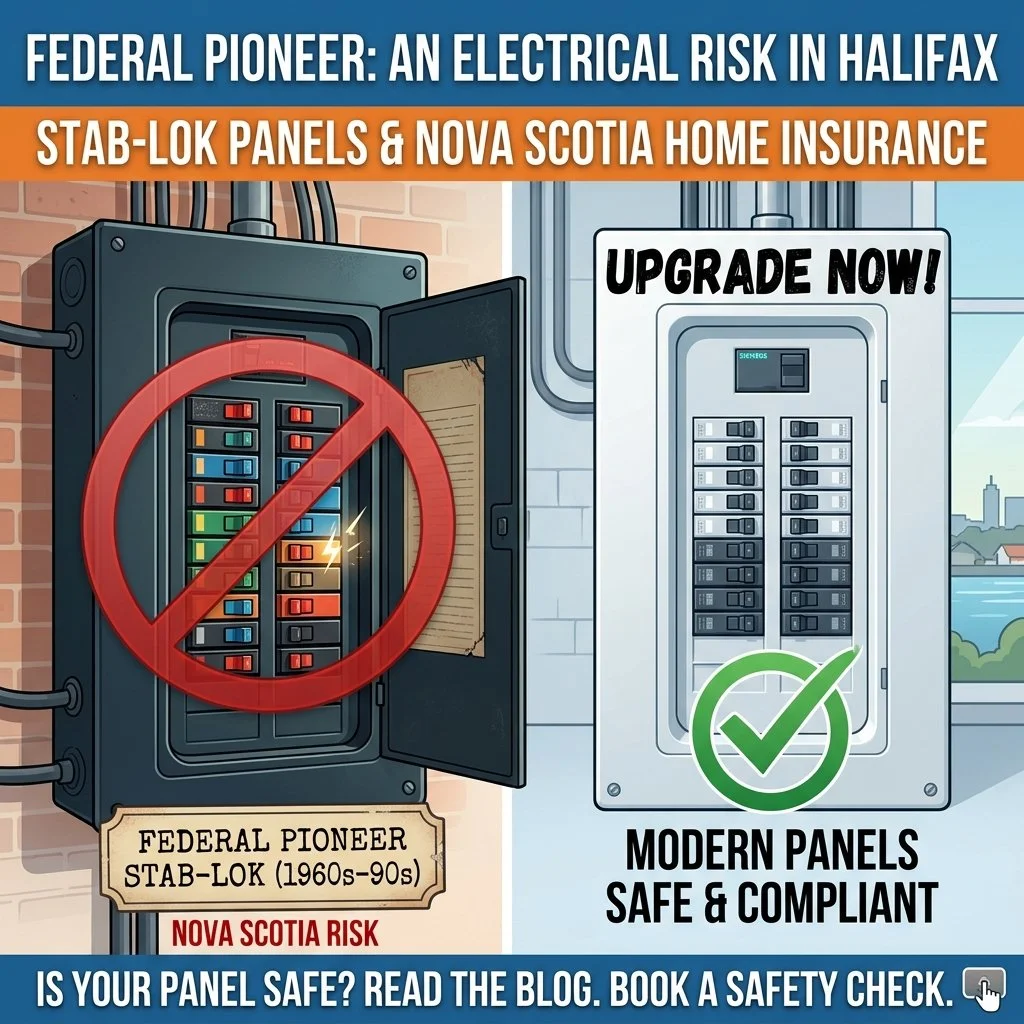
Contrasting an unsafe Federal Pioneer breaker panel with a modern electrical panel. Features safety status icons, Halifax electrical risk highlights, and a call-to-action for home safety checks.
What is a Federal Pioneer Stab-Lok Panel?
Federal Pioneer was the Canadian brand name for Federal Pacific Electric (FPE). These panels were installed in millions of Canadian homes, equipped with "Stab-Lok" circuit breakers designed to snap onto a central bus bar.
In a healthy system, when a circuit draws too much power or shorts out, the circuit breaker trips, instantly cutting off the current to protect your wiring from melting or catching fire.
Why Are Federal Pioneer Panels Dangerous?
The primary issue with Federal Pioneer Stab-Lok panels is a high rate of failure to trip during electrical overloads.
High Failure Rate: Independent testing by electrical safety engineers showed that a substantial percentage of Stab-Lok breakers fail to trip when overloaded. Some double-pole breakers fail on one side, leaving live power running through a faulty circuit.
Loose Connections & Arcing: The "Stab-Lok" design can loosen over time, leading to electrical arcing, intense heat buildup, and scorched bus bars behind the breaker cover.
No Warning Signs: Unlike other electrical issues that cause nuisance tripping, a failing Federal Pioneer breaker often gives no warning—it simply fails to cut power when you need it most.
Identifying a Federal Pioneer Panel in Your Home
You can check your panel's identity without removing any covers or touching any wiring:
Brand Name: Look for "Federal Pioneer", "FP", or "Stab-Lok" printed on the metal door or the inside label.
Breaker Switches: Many Federal Pioneer breakers feature distinct red-tipped switches.
Color Scheme: Panels often feature dark orange, red, or white branding against a grey steel box.
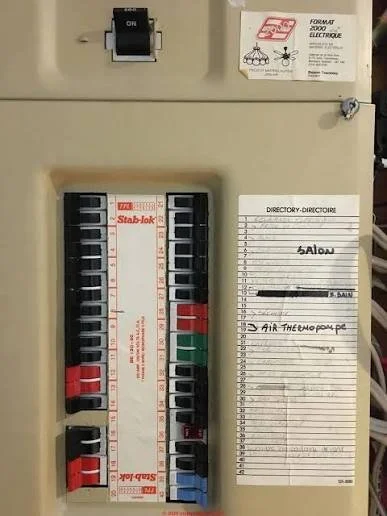
A real-life example of a Federal Pioneer Stab-Lok electrical breaker box installed in a home. It features distinctive red-tipped switches, central branding, and a handwritten directory card.
The Nova Scotia Insurance Factor
Beyond safety concerns, Federal Pioneer panels present logistical challenges for Halifax homeowners looking to buy, sell, or renew home insurance:
Coverage Refusals: Many home insurance providers operating in Nova Scotia now refuse to write new policies for homes containing Stab-Lok panels unless they are scheduled for immediate replacement.
Real Estate Friction: Home inspectors throughout HRM frequently flag Federal Pioneer panels on inspection reports. This can delay home closings or result in buyers requesting panel replacement credits.
Frequently Asked Questions
Q1: Can I just replace the individual broken breaker with a new one?
No. While replacement breakers are manufactured, safety experts point out that the underlying issue lies within the panel’s internal bus bar design and connection points. Installing a new breaker into a flawed panel box does not resolve the risk.
Q2: My Federal Pioneer panel hasn't tripped in 30 years. Doesn't that mean it works?
Not necessarily. A breaker that never trips may simply mean your circuits haven't experienced a severe overload—or it means the breaker is jammed and won't trip when a fault occurs.
Q3: Are Federal Pioneer panels illegal in Nova Scotia?
They are not illegal to own, and there was never a full Canadian government recall. However, lack of a recall does not mean they are safe; electrical codes have evolved, and safety standards now consider these panels obsolete.
Q4: How long does it take to replace an electrical panel in Halifax?
A standard residential panel upgrade (e.g., swapping a 100-amp Federal Pioneer panel to a modern 100-amp or 200-amp Siemens or Eaton panel) typically takes a certified electrician 8 to 12 hours, including the required Nova Scotia Power disconnect/reconnect process and local electrical inspection.
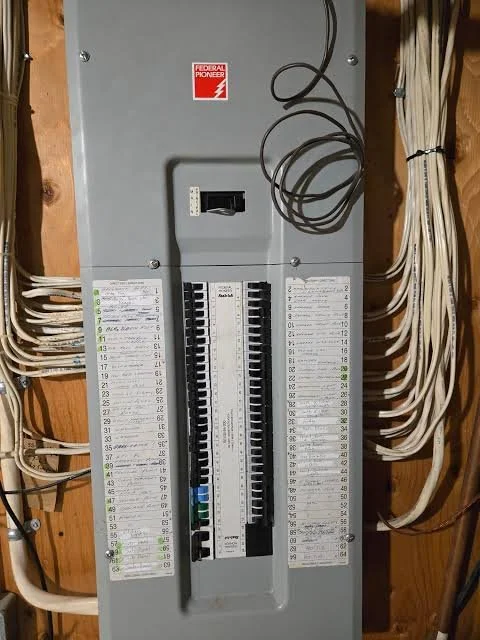
A full view of a wall-mounted Federal Pioneer residential breaker panel with exposed cable runs. The unit features the iconic red FP logo, main shutoff switch, and handwritten circuit labels along both sides.
Protect Your Halifax Home Today
Don't wait for an electrical emergency or an insurance ultimatum to address an outdated electrical panel. If your home has a Federal Pioneer or Stab-Lok panel, have it evaluated by a red-seal electrician.
Need a certified electrician in Halifax, Dartmouth, or Bedford? Contact me today so I can connect you with an electrician to schedule an electrical panel safety inspection and get a clear, upfront quote on upgrading your home to a modern, safe electrical service.
