Canada’s Foreign Buyer Ban Expiration (2027): Expert Forecasts & U.S. Buyer Demand
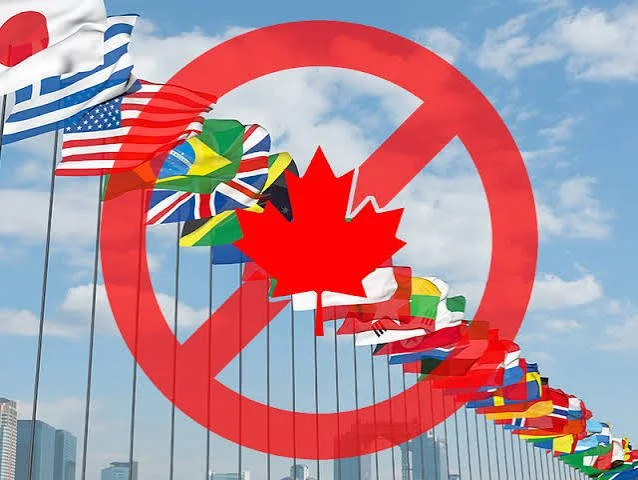
A graphic illustration depicting Canada's federal ban on non-Canadian real estate buyers, showing a prominent red prohibition sign and maple leaf set against a line of international flags and a partly cloudy sky.
Canada’s federal ban on non-Canadian residential property purchases, officially known as the Prohibition on the Purchase of Residential Property by Non-Canadians Act, is approaching its scheduled expiration on January 1, 2027.
First introduced in 2023 and extended in 2024, the policy was designed to suppress speculation and cool record housing prices. However, with shifting real estate dynamics, changing political priorities, and housing supply shortages across major metropolitan areas, buyers, sellers, and investors are asking what comes next.
Will the federal government let the ban lapse quietly, extend it a second time, or replace it with a restructured policy?
What Real Estate & Policy Experts Are Saying
Housing economists, legal analysts, and mortgage professionals largely agree on one thing: the foreign buyer ban was more about political signaling than housing market fundamentals.
Minimal Impact on Pricing: Economists point out that foreign purchases accounted for less than 2%–4% of home transactions nationwide prior to the ban. The broader affordability crisis was primarily driven by domestic credit conditions, population growth, and a severe housing supply deficit—not foreign buyers alone.
The "Australian Model" Shift: Legal analyses from major firms highlight that federal policymakers are evaluating a transition toward an Australian-style model. Rather than a blanket restriction, this model bars foreign investors from purchasing existing homes but encourages them to fund new residential developments, channeling capital directly into expanding supply.
Selective Regional Exemptions: Industry leaders have called for targeted carve-outs—such as reciprocal arrangements for U.S. buyers or permitting foreign purchases in oversupplied sectors (like downtown high-rise condos) where domestic buyer activity has stalled.
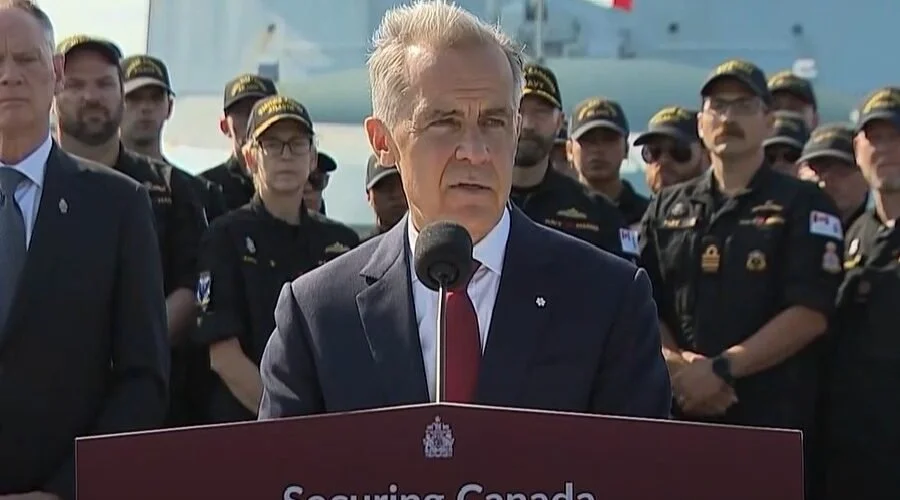
A photo capturing Mark Carney speaking at a news conference in Halifax, Nova Scotia, flanked by members of the Canadian Armed Forces and navy personnel during an announcement on defence policy, sovereignty, and security spending.
The "Plan B" Factor: Americans Eyeball Canadian Property Amid Political Tensions
While federal restrictions remain in place, search traffic and inquiries from American buyers eyeing Canadian real estate have repeatedly spiked following contentious political events, controversial court rulings, and shifting domestic policy south of the border. Royal LePage reports that U.S.-based traffic to Canadian listing portals surges significantly during periods of heightened political polarization in the United States.
For wealthy Americans, buying Canadian real estate represents a strategic "Plan B"—a safe-haven investment offering social stability, proximity, and strong long-term value. However, prospective cross-border buyers face two major hurdles:
Current Purchase Restrictions: Non-resident Americans are still subject to the federal foreign buyer ban until at least 2027, unless buying exempt assets like recreational cottages, large multi-family buildings, or properties outside designated Census Metropolitan Areas.
Competitive Immigration Rules: Moving to Canada permanently is not as simple as buying a house. Canada's points-based Express Entry system and recent target reductions prioritize specific high-demand labor skills over simple capital investment.
Even if the federal ban ends, Americans looking to relocate will still need to navigate cross-border tax considerations, strict immigration requirements, and hefty provincial non-resident taxes.
Will It Expire Quietly or Will the Government Make Changes?
It is unlikely the government will let the policy expire completely without replacing or adjusting it. Public sentiment strongly supports foreign buyer restrictions, making a complete, quiet sunset politically risky.
Instead, expect policy revisions over a simple expiration or blanket extension:
Strategic Pivot to Supply Creation: The federal government will likely modify the act to allow non-Canadians to buy new-construction units, multi-family projects, or fund development-ready land—shifting foreign money into supply generation rather than existing resale homes.
Continued Reliance on Provincial Taxes: Even if federal rules loosen, provincial and municipal guardrails will remain. In key markets like Vancouver (B.C. 20% Foreign Buyer Tax) and Toronto (Ontario 25% Non-Resident Speculation Tax), high local tax levies will continue to deter short-term foreign speculation.
Targeted Exemption Adjustments: Broader exemptions for international students, work permit holders, and cross-border buyers could be refined to support labor needs and tourism-heavy resort markets.
Frequently Asked Questions (Q&A)
1. When does the Canadian foreign buyer ban officially end?
The federal ban is set to expire on January 1, 2027, unless extended or replaced by Parliament before that date.
2. Does the foreign buyer ban apply to all real estate in Canada?
No. The ban primarily targets residential properties with 1 to 3 units located within Census Metropolitan Areas (CMAs) and Census Agglomerations (CAs). Vacation homes, recreational cottages outside major urban boundaries, commercial real estate, and multi-family developments with 4+ units are generally exempt.
3. If the federal ban expires, can foreign buyers immediately buy homes in Toronto or Vancouver?
While federal restrictions may lift or change, provincial non-resident buyer taxes (such as B.C.’s 20% tax and Ontario’s 25% tax) remain active, alongside Toronto's Municipal Non-Resident Speculation Tax. Foreign capital will still face significant regional transaction taxes in those markets.
4. How does the foreign buyer ban affect temporary residents or work permit holders?
Exemptions exist for eligible work permit holders and international students who meet specific tax filing, physical presence, and purchase price criteria. Permanent residents and Canadian citizens are fully exempt regardless of where they reside.

A professional real estate consultant and an investor discuss Canadian foreign property ownership regulations and cross-border investment strategies on a modern balcony, featuring a panoramic view of the Toronto skyline and urban development cranes.
Ready to Navigate the Changing Canadian Real Estate Market?
Whether you are a local buyer looking to time your purchase, an investor tracking international capital flows, or a seller preparing for shifts in market demand, staying ahead of federal policy changes is critical.
Contact me today to discuss how upcoming legislative shifts could impact your real estate portfolio, financing strategies, and upcoming property transactions.
