
Canadian Prime Minister Mark Carney and Finance Minister François-Philippe Champagne present Budget 2026, introducing new foreign homebuyer exemptions affecting Halifax and Nova Scotia real estate.
Canada just changed the rules on foreign homebuyers. But if you think this policy shift is going to suddenly fix housing affordability here in Halifax, you are mistaken.
In Budget 2026, Ottawa officially proposed easing restrictions under the Prohibition on the Purchase of Residential Property by Non-Canadians Act. The new framework carves out an exemption allowing non-Canadians to purchase brand-new housing developments while extending the ban on existing resale homes until January 1, 2029.
On paper, it sounds like a major move designed to spur new housing supply. Behind the headline, however, lies a critical gap between federal policy and local Nova Scotia reality. Whether you are a homebuyer, seller, or investor in the Halifax Regional Municipality (HRM), understanding how federal rules collide with provincial taxes could save you tens of thousands of dollars.
A Prediction Proven Right
If this federal policy shift sounds familiar, it is because the writing has been on the wall. Just one month ago, I broke down national housing trends and mentioned this exact move: Ottawa was backed into a corner by slowing housing starts and developers hitting pause on multi-family projects, meaning the federal government would inevitably carve out an exemption to bring foreign capital back into new construction.
The federal logic is straightforward: direct international capital into funding heavy residential development without placing upward price pressure on existing single-family resale homes. Yet how does that translate on the ground in Halifax and Dartmouth?
The Halifax-Dartmouth Numbers: 23% New Construction
To understand what this exemption actually means for our local market, we need to look at active MLS inventory across the Halifax-Dartmouth area:
Total Active Residential Listings: 1,553
New Construction Listings: 360
New Construction Market Share: 23%
Seeing that nearly a quarter of all active residential listings in Halifax-Dartmouth are brand-new builds is surprising. On the surface, you might look at that 23% figure and assume that almost a quarter of our local market just opened up to a massive wave of international buyers.
If you are a local developer, that sounds like great news. In practice, provincial tax law tells a very different story.
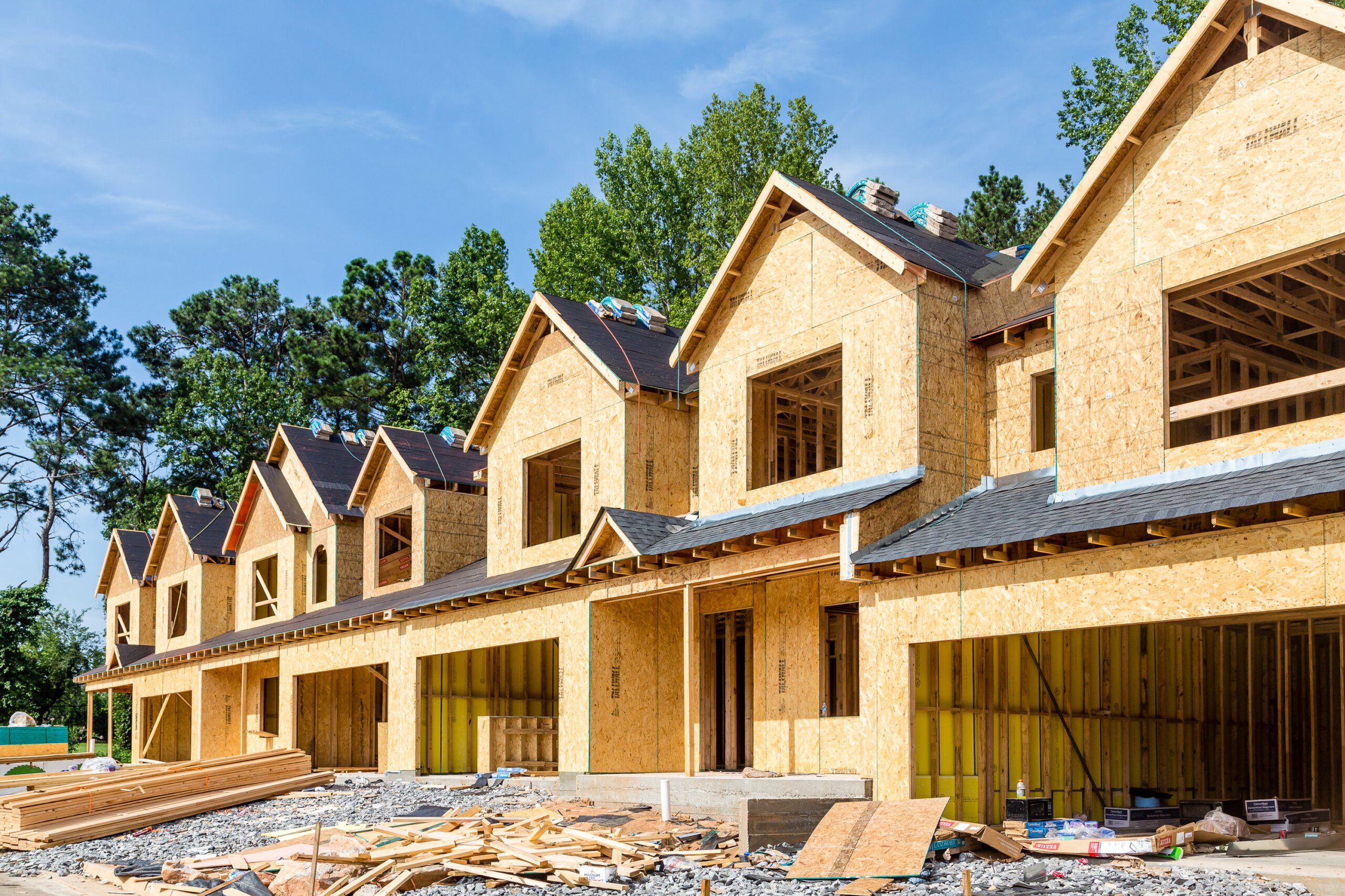
New construction residential townhouses under development in Halifax-Dartmouth, highlighting the 23% local market share affected by Ottawa's Budget 2026 foreign buyer exemption
The Nova Scotia Reality Check: The 10% Non-Resident Deed Transfer Tax
National news outlets frequently overlook a crucial detail when covering Canadian housing policy: federal rules are only half the equation. Provincial and municipal regulations dictate your actual closing costs and investment returns.
Even as Ottawa moves to lift the federal prohibition on new builds, Nova Scotia’s 10% Non-Resident Provincial Deed Transfer Tax (PDTT) remains firmly in place.
In Nova Scotia, if a non-resident purchases a residential property (with three units or less) and does not move to the province to establish residency within 12 months of closing, they are hit with a 10% provincial tax on the purchase price or assessed value, whichever is higher. That 10% penalty is stacked on top of the standard 1.5% HRM municipal deed transfer tax and closing costs.
Simply put, even if Ottawa gives a non-resident buyer the federal green light to purchase a newly built townhouse in Bedford or a pre-construction condo in Downtown Halifax, the Province of Nova Scotia will still be waiting at the closing table to collect a hefty 10% tax premium.
What This Really Means for Halifax Buyers and Investors
Here is the bottom line for our local market: Ottawa’s foreign buyer exemption will not make much of a difference in Halifax, especially on the smaller investment side of things.
For a small-scale non-resident investor looking to pick up one or two units, such as a pre-construction condo or a newly built duplex in Dartmouth, Nova Scotia’s 10% Non-Resident Deed Transfer Tax acts as an immediate dealbreaker. A 10% upfront tax hit completely erodes cap rates and projected return on investment. No savvy small investor is going to absorb a massive provincial tax penalty just because Ottawa lifted a federal ban.
Where could this policy move the needle? It may help large institutional developers secure foreign equity financing to get major multi-family apartment towers off the ground. For everyday residential resale, local homebuyers, and mom-and-pop investors, however, this announcement is largely noise.
That 23% share of new construction on the Halifax-Dartmouth market is not going to disappear overnight due to international buyers. Local fundamentals, Bank of Canada interest rates, active inventory levels, local household incomes, and provincial tax rules remain the true drivers of Halifax real estate.
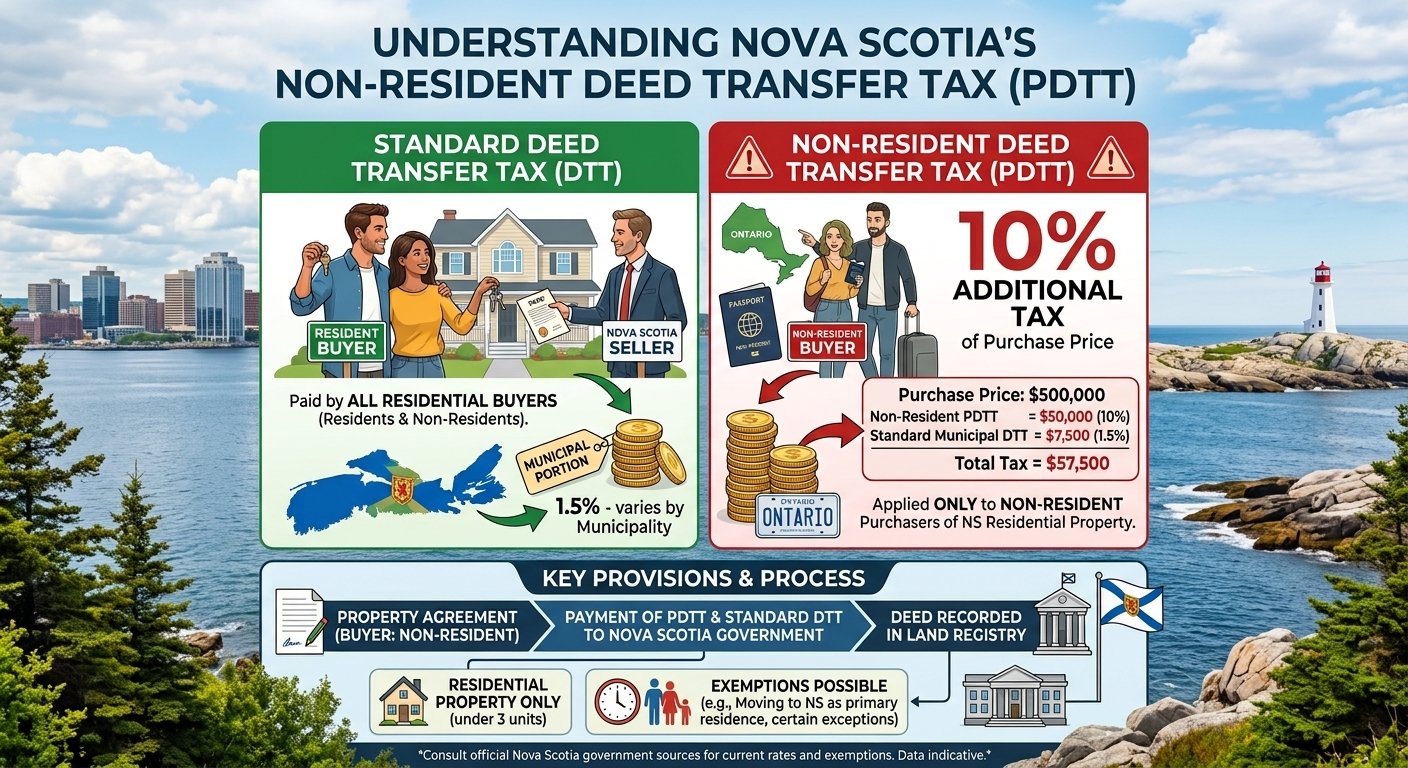
Detailed infographic comparing Nova Scotia's standard real estate transfer tax with the 10% non-resident deed transfer tax (PDTT).
Frequently Asked Questions (FAQ)
1. Can foreign buyers purchase a home in Halifax right now?Under Ottawa’s Budget 2026 proposal, non-Canadians will be permitted to purchase newly constructed residential properties once enabling legislation and regulations take effect, while the ban on existing resale homes is extended until January 1, 2029. Until the new regulations officially come into force, existing restrictions still apply unless a buyer qualifies for an exemption (such as eligible work permit holders or international students meeting strict criteria).
2. Does Ottawa’s new construction exemption cancel Nova Scotia’s 10% Non-Resident Deed Transfer Tax? No. Federal foreign buyer regulations and provincial taxes operate independently. Non-residents purchasing residential property of three units or less in Nova Scotia must still pay the 10% Provincial Deed Transfer Tax unless they move to Nova Scotia and provide proof of residency within 12 months of the property transfer.
3. How much of the Halifax-Dartmouth housing market is new construction? Across the Halifax-Dartmouth area, approximately 23% of active residential MLS inventory consists of new construction (360 new-build listings out of 1,553 total active residential listings).
4. Will the foreign buyer ban exemption cause Halifax home prices to rise? It is unlikely to cause a significant price spike in Halifax. Because Nova Scotia’s 10% Non-Resident Deed Transfer Tax heavily penalizes individual non-resident purchases of single-family homes, condos, and small multi-unit properties, international demand for individual units will remain muted. Local interest rates, wage growth, and domestic migration continue to have a much greater impact on HRM home prices.
Planning Your Next Move in Halifax or Dartmouth?
National headlines rarely tell the full story of what is happening on the ground in Nova Scotia. Whether you are weighing the pros and cons of buying new construction, looking to sell in a shifting market, or running the numbers on an investment property in HRM, having hyper-local data makes all the difference.
Ready to build a strategy tailored to the Halifax-Dartmouth market? Book a phone consultation today or reach out directly to discuss your real estate goals.
