
A Halifax home buyer reviews and signs a Nova Scotia Form 400 Agreement of Purchase and Sale to submit an offer on a property in HRM.
You’ve spent weekend after weekend driving around the Halifax Regional Municipality (HRM), touring open houses in Dartmouth, Bedford, and the South End, and you’ve finally found the one. Now comes the most exciting and nerve-wracking, step of the home buying journey: putting ink to paper and submitting a formal offer.
In Nova Scotia, making an offer on a residential property isn’t just naming a price. It means drafting a legally binding contract regulated by the Nova Scotia Real Estate Commission (NSREC) known as Form 400: Agreement of Purchase and Sale.
Whether you are a first-time home buyer in HRM or relocating to the East Coast, understanding how Form 400 works will protect your deposit, safeguard your due diligence, and position your offer to win.
Breaking Down Nova Scotia Form 400: Core Offer Essentials
Form 400 is the standard contract used by licensed real estate agents across Nova Scotia for resale residential properties. While the document covers numerous legal clauses, your offer strategy comes down to a few foundational sections:
1. The Deposit
Your deposit is your financial "skin in the game". Once your offer is accepted, the deposit is held safely in the listing brokerage’s trust account and is credited directly toward your down payment and purchase price on closing day.
What’s standard in Halifax? Typically, buyers put down 1% to 2% of the purchase price. Though in competitive, multi-offer neighbourhoods across Halifax and Dartmouth, offering a stronger deposit signals financial seriousness to the seller.
2. Purchase Price & Closing Day
Your Purchase Price is the total amount you are offering for the property, while Closing Day is the official transfer date when funds change hands through your real estate lawyers and you receive the keys. In Nova Scotia, standard closing windows typically range from 30 to 60 days from the date of acceptance.
3. Seller Obligations & Buyer Conditions
Form 400 outlines standard seller obligations, including keeping the property insured until closing day and ensuring that included appliances and fixtures are conveyed in good working order.
Just as important are your Buyer Conditions and Additional Provisions. Your conditions act as your legal safety net, giving you a dedicated timeframe to arrange mortgage financing, conduct a professional home inspection, and confirm home insurance. If your conditions are not satisfied within that window, you can walk away from the agreement with your deposit returned.

A certified home inspector examines exterior siding and window flashing during a buyer condition period on a property in Halifax, Nova Scotia.
Mandatory Attached Schedules in Nova Scotia Real Estate
While Form 400 covers standard freehold single-family homes, property types across HRM and rural Nova Scotia vary widely. Depending on what you are buying, your REALTOR® will attach specific NSREC schedules that carry the exact same legal weight as the main contract:
Resale Condominium Schedule (Form 402): Buying a condo along the Halifax waterfront, in Clayton Park, or in Downtown Dartmouth? Form 402 makes your purchase conditional on reviewing the condominium corporation’s financial statements, Reserve Fund Study, bylaws, and board meeting minutes. This ensures you aren't caught off guard by upcoming special assessments or sudden condo fee increases.
Mini / Manufactured Home & Leased Land Community Schedule (Form 406): If you are purchasing a mini home in Lower Sackville, Timberlea, or a land-lease community, Form 406 covers vital details including serial numbers, park rules, site lease approvals, and community management inspection reports.
Water and Septic Schedule (Form 431): Looking just outside the urban core in Fall River, Hammonds Plains, Tantallon, or Porters Lake? Form 431 protects rural buyers by making the offer conditional on water potability and flow-rate testing, as well as a certified septic inspection and written confirmation that the tank has been pumped. Replacing a failed septic system in Nova Scotia can easily cost $20,000 to $30,000+, making this schedule non-negotiable.
3 Proven Tips to Help Your Halifax Real Estate Offer Stand Out
Submitting a strong offer isn’t always about being the highest bidder. Use these three practical strategies to strengthen your position:
Give Yourself Enough Time (Aim for ~2 Weeks on Conditions):
Avoid rushing your due diligence window. Aim for roughly 10 to 14 days (two weeks) to fulfill your financing and inspection conditions. During busy spring and fall markets in Halifax, booking reputable home inspectors, WETT inspectors, or bank appraisers takes time. A realistic buffer keeps you from scrambling against a hard deadline.
Be Flexible on Closing & Align with the Seller:
Terms often win deals when prices are close. Before drafting your offer, have your buyer’s agent ask the listing agent what closing date the seller prefers. If the sellers need a longer 75- or 90-day closing while waiting for their next home to be built, matching their ideal timeline can beat out a competing offer with a rigid date.
Never Waive Standard Conditions and Request Key Documents Early:
Even in competitive pockets of HRM, protect yourself by keeping your core financing and inspection conditions intact. Additionally, ask for the seller’s Property Disclosure Statement (PDS), which outlines known history regarding roof leaks, oil tanks, or foundation repairs, alongside a copy of the current HRM property tax bill, which your mortgage broker or lender will need early to finalize your mortgage approval.
What Happens After You Submit Your Offer?
Once you sign Form 400 and set an irrevocable deadline, your agent submits the package to the listing agent. From there, the seller has three choices:
Accept: The seller signs your offer as-is, and you are officially under a conditional Agreement of Purchase and Sale.
Decline: The seller rejects the offer outright, and your deposit remains untouched.
Counter (Form 410): The seller modifies the price, closing date, or terms and sends a formal counter-offer back to you for review.
Once both parties agree and sign off, the clock officially starts on your condition period!
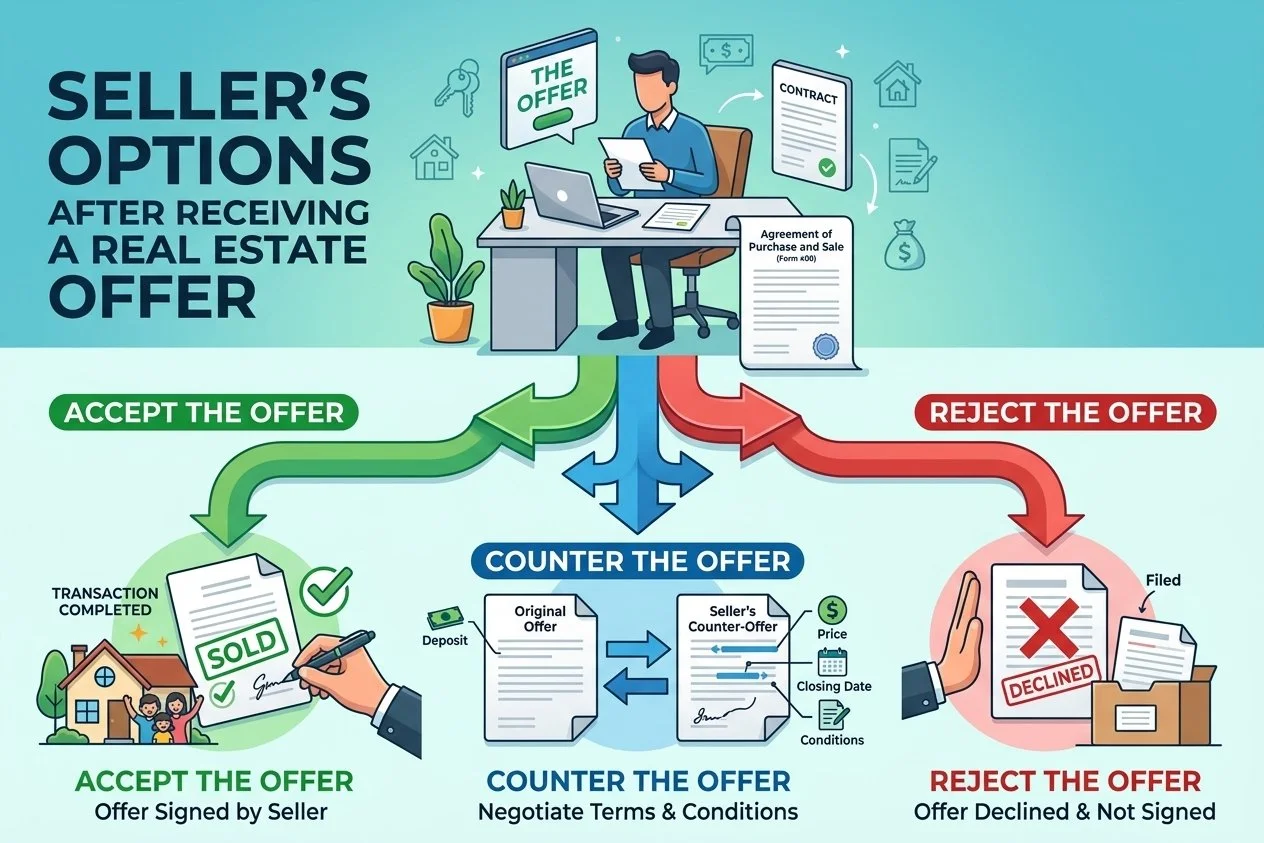
An infographic flowchart illustrating a real estate seller's options to accept, counter, or reject a property offer.
Frequently Asked Questions (FAQ) About Making an Offer in Nova Scotia
1. What is Form 400 in Nova Scotia real estate?
Form 400 is the official Agreement of Purchase and Sale regulated by the Nova Scotia Real Estate Commission (NSREC). It is the standard contract used when buying a resale home in Nova Scotia and outlines the purchase price, deposit, closing date, seller obligations, and buyer conditions.
2. How much is a typical house deposit in Halifax, Nova Scotia?
A standard deposit in Halifax Regional Municipality (HRM) is typically between 1% and 2% of the purchase price. However, you can put down whatever you are comfortable with. The deposit is held in a brokerage trust account upon acceptance and is applied toward your down payment on closing day.
3. What happens if my home inspection or financing falls through in Nova Scotia?
As long as your Agreement of Purchase and Sale includes financing and home inspection conditions under Clause 7 and you notify the seller before your condition deadline expires, you can terminate the agreement and receive your full deposit back.
4. Do I need a different schedule if I am buying a house with a well and septic in HRM?
Yes. If a property in areas like Fall River, Hammonds Plains, or Eastern Passage relies on a private well or septic system rather than Halifax Water municipal services, you should attach Form 431 (Water and Septic Schedule) to ensure water quality, flow rate, and septic system integrity are verified before the deal becomes firm.
Ready to Buy a Home in Halifax or Nova Scotia?
Navigating contracts, schedules, and negotiations is much easier with a local expert in your corner. Thinking about making a move in Halifax, Dartmouth, Bedford, or anywhere in HRM? Contact me today to book a free buyer strategy consultation, or subscribe to our YouTube channel to catch our next guide on what happens step-by-step once your offer is accepted!
