Using a fireplace as a supplemental heat source for extra warmth in Halifax homes during Nova Scotia winters.
Heating a home in the Halifax Regional Municipality (HRM) comes with a unique set of weather challenges. Winter in Nova Scotia brings a volatile mix of freezing harbour winds, heavy dampness, rapid freeze-thaw cycles, and icy coastal rain.
With local electricity rates and heating oil prices remaining a constant concern for homeowners, choosing the right heating system is one of the biggest financial decisions you will make for your property.
Whether you own a 100-year-old home in the North End, a split-entry in Dartmouth, or a modern build in West Bedford, understanding your heating options is the first step toward lowering your monthly power bills.
This guide breaks down every major home heating type used across Nova Scotia, ranks them by overall efficiency, and highlights the best solutions for Halifax climate conditions.
1. Cold-Climate Heat Pumps (Mini-Split & Ducted)
Heat pumps are the gold standard for home heating efficiency across Nova Scotia. Unlike traditional systems that create heat by burning fuel or running electric elements, heat pumps transfer heat from the outside air into your home. Modern cold-climate heat pumps operate effectively down to temperatures as low as -25°C or -30°C, making them perfectly suited for Maritime winters.
Ductless Mini-Splits: Ideal for older Halifax homes without existing ductwork, flat-roof additions, or retrofitting specific zones like a finished basement.
Centrally Ducted Heat Pumps: Best for replacing an existing oil or gas furnace in homes that already have ductwork throughout.
Efficiency & Performance
Coefficient of Performance (COP): Typically 2.5 to 4.0+. This means for every 1 unit of electricity used, the system yields 2.5 to 4 units of heat energy.
Halifax Advantage: Heat pumps also act as central air conditioners and dehumidifiers. They pull dampness out of the air during foggy Halifax summers, providing year-round climate control.
2. Electric Thermal Storage (ETS) Systems
Electric Thermal Storage units are heavy, well-insulated heating appliances filled with ceramic bricks. They pair directly with Nova Scotia Power's Time-of-Day (TOD) electricity rates.
An ETS system charges up by heating the internal bricks during off-peak hours (overnight and on weekends) when electricity costs significantly less. During peak daytime hours, the unit slowly releases that stored heat into your home while avoiding high daytime rates.
Efficiency & Performance
Efficiency Level: 100% thermal efficiency at converting electricity into heat energy.
Financial Savings: While they convert energy at a 1:1 ratio, the financial efficiency comes from capitalizing on discounted off-peak power rates, reducing total heating expenses up to 40% compared to standard electric baseboards.
3. Oil-Fired Furnaces and Boilers
Nova Scotia historically relied on home heating oil for decades, and many established neighbourhoods in Clayton Park, Spryfield, and historic Dartmouth still feature oil tanks in the basement or yard.
Oil systems burn fuel to heat air (furnace) or water (boiler) that circulates through radiators or baseboard pipes.
Efficiency & Performance
Efficiency Level: Older oil furnaces operate around 60% to 75% Annual Fuel Utilization Efficiency (AFUE). Modern high-efficiency condensing oil units can reach 80% to 88% AFUE.
Drawbacks in HRM: High fuel prices, ongoing tank replacement requirements to meet insurance standards, and environmental risks associated with fuel leaks make oil one of the most expensive and high-maintenance heating methods in the province today.
4. Electric Baseboards (Resistance Heat)
Electric baseboard heaters are common in apartment rentals, condos, and smaller homes throughout Halifax due to their low initial installation cost. Each heater runs on its own thermostat zone, giving you localized temperature control.
Efficiency & Performance
Efficiency Level: 100% electrical efficiency (1 kWh of electricity equals 1 kWh of heat).
Cost Factor: Though 100% efficient at turning electricity into heat, electric resistance heat is very expensive to operate as a primary whole-home heat source in cold weather because it lacks the multiplying energy factor of a heat pump.
5. Natural Gas and Propane Systems
Natural gas infrastructure managed by Eastward Energy serves select areas within the Halifax Regional Municipality, including parts of Halifax, Bedford, Dartmouth, and industrial parks like Burnside. Where natural gas pipeline grid access is unavailable, bottled propane tanks offer a similar option.
Efficiency & Performance
Efficiency Level: Modern condensing gas furnaces routinely achieve 90% to 98% AFUE.
Halifax Considerations: Gas provides fast, intense heat during extreme cold snaps. However, limited grid coverage across NS means it is not accessible to every neighborhood.
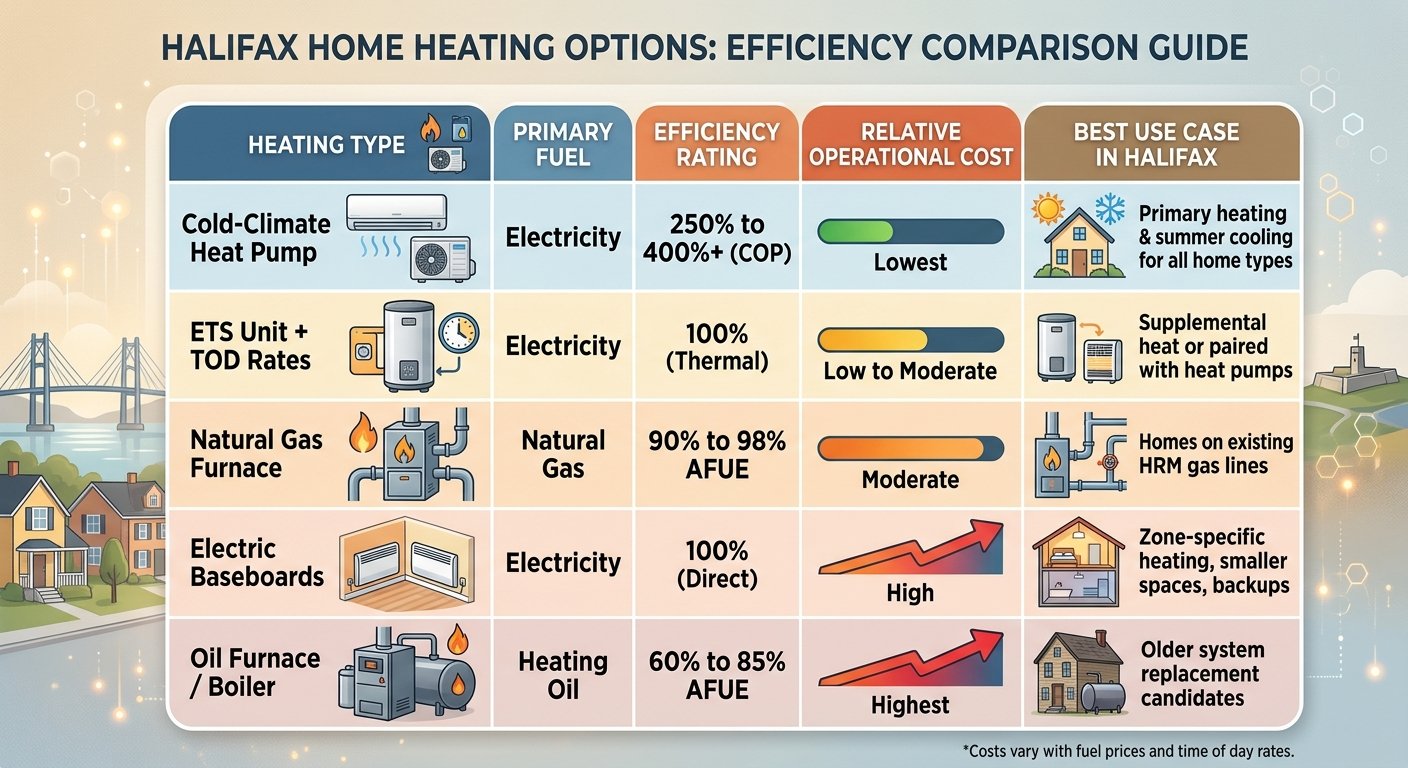
Compare the efficiency, fuels, and operational costs of Halifax home heating systems like heat pumps, gas, electric, and oil furnaces with this guide.
Which System Is Most Efficient for Nova Scotia Homes?
Cold-climate air source heat pumps are definitively the most efficient heating option available in Nova Scotia. Because they move heat rather than generate it out of raw fuel, they deliver up to four times the heating output for every watt of power consumed.
For the absolute best energy setup in Halifax, many homeowners choose a hybrid system:
Primary Source: Ductless or ducted cold-climate heat pump covering 80% to 90% of your seasonal heating needs and providing summer air conditioning.
Secondary/Backup: Retaining existing electric baseboards or an ETS system to kick on during extreme cold drops below -20°C.
Taking advantage of provincial rebates through Efficiency Nova Scotia (such as the Home Energy Assessment and HomeWarming programs) can lower the upfront cost of converting from oil or electric resistance to heat pumps.
Frequently Asked Questions
Do heat pumps work in Nova Scotia during freezing winter weather?
Yes. Modern cold-climate heat pumps are designed specifically to extract heat from outdoor air down to temperatures of -25°C or lower. Because winter temperatures in coastal Halifax rarely stay below -20°C for long periods, cold-climate models perform efficiently throughout the season.
How much can I save by switching from oil heating to a heat pump in Halifax?
Homeowners in the Halifax area who replace an oil furnace with a high-efficiency heat pump routinely save between 40% and 60% on their annual heating bill. You also eliminate oil tank liability and fuel delivery fees.
What is the most expensive heating option in Nova Scotia?
Oil heating and standard electric baseboard heating compete for the highest operating costs in the province. While electric baseboards are cheap to install, using them as your sole heat source in a large house during a cold Maritime January leads to high power bills.
Are there rebates available for upgrading home heating in Nova Scotia?
Yes. Efficiency Nova Scotia offers rebates for homeowners upgrading to qualified ductless heat pumps, centrally ducted systems, thermal storage, and insulation improvements. Income-qualified programs may also provide zero-cost home upgrades for eligible households.
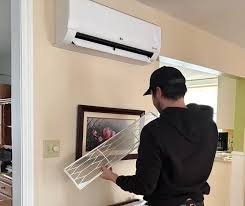
Regular Cleaning and maintenance of a ductless mini-split air conditioning unit filter, the most efficient way to heat a home in Halifax, NS.
Ready to Lower Your Energy Bills This Winter?
Upgrading your home heating system is the fastest way to increase comfort and reduce your monthly utility expenses in Halifax.
Contact me today and I will give you directions on how to set up an in-home heating evaluation.
