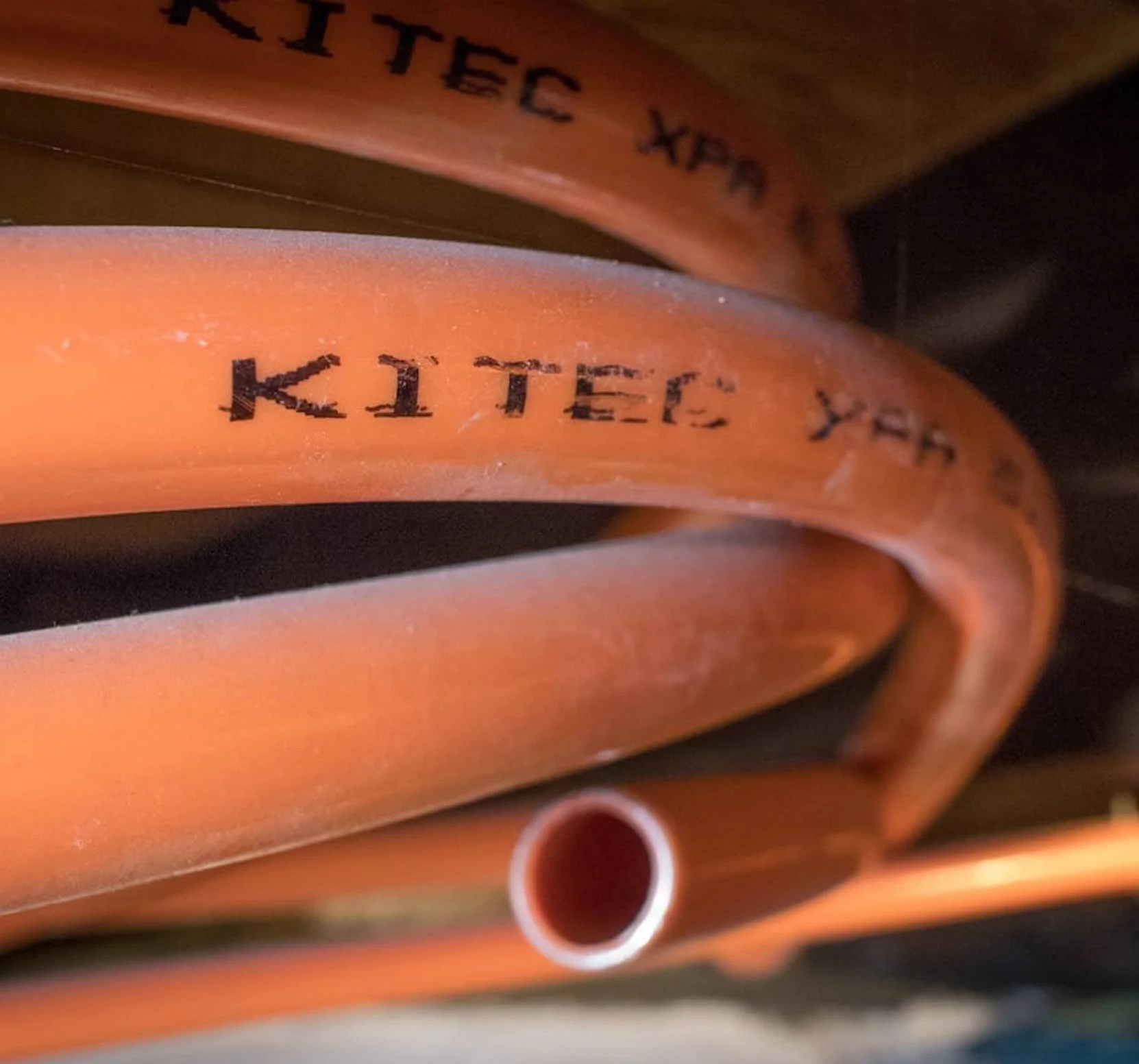
Close-up visual guide for identifying recalled orange Kitec XPA plumbing piping commonly found in Halifax, Nova Scotia homes built between 1995 and 2007. Kitec is identified by its distinct orange flexible tubing, printed "KITEC" brand lettering on the exterior, and composite aluminum-plastic cross-section, which signals high-risk water lines to HRM home inspectors and insurance providers.
If you live in the Halifax Regional Municipality (HRM)—from Clayton Park and Dartmouth to Sackville, Bedford, and Fall River—and your home was built or renovated between 1995 and 2007, there is a strong possibility you have Kitec plumbing.
Once marketed as a corrosion-resistant alternative to copper, Kitec piping was recalled across North America after high failure rates. In the Halifax market, Kitec has evolved from a minor home maintenance issue into a major consideration for home inspections, mortgage approvals, and home insurance coverage.
Here is an expert breakdown of how to spot Kitec, why local insurers flag it, and what steps to take if it’s inside your walls.
How to Spot Kitec Plumbing in Your Home
Kitec is a flexible, composite pipe made of aluminum sandwiched between inner and outer layers of plastic. In Halifax properties, it is usually easy to spot in visible utility areas:
Colors: Hot water lines are typically bright orange, while cold water lines are bright blue. (It was also produced in red, gray, and black).
Markings: Look for stamps reading Kitec, KTC, PlumbBetter, WarmRite, or IPEX AQUA on the flexible tubing or brass fittings.
Electrical Panel Warning: Look for a notice near your main electrical panel indicating that the electrical system cannot be grounded to the plumbing.
Why Kitec Plumbing Fails
The risk associated with Kitec stems from two key structural issues:
Dezincification of Brass Fittings: Kitec systems use high-zinc brass fittings. Over time, water causes zinc to leach out of the brass, creating white powdery buildup (zinc oxide). This weakens the fitting and restricts water flow until the joint snaps or leaks.
Polyethylene Pipe Degeneration: The composite pipes are rated for specific temperatures and pressures. High water temperatures or elevated water pressure degrade the polymer, causing the pipe to bulge or burst without advance warning.
The Insurance & Real Estate Impact in Halifax
Nova Scotia home insurance providers treat Kitec plumbing as a high-risk material. While policies vary across insurance brokerages in HRM, you can expect one of the following scenarios if Kitec is present:
Higher Deductibles or Exclusions: Some insurers will cover the home but exclude water damage caused by Kitec, or require a $5,000–$10,000 water-damage deductible.
Mandatory Replacement Timeline: Certain underwriters require proof of complete pipe replacement by a licensed plumber within 30 to 90 days of closing.
Refusal of Coverage: Some insurance companies decline coverage entirely until all Kitec is removed.
For home buyers and sellers under Nova Scotia Real Estate Commission guidelines, sellers are expected to disclose known Kitec installations. Buyers frequently use inspection reports to negotiate price reductions or require sellers to re-pipe the property before closing.
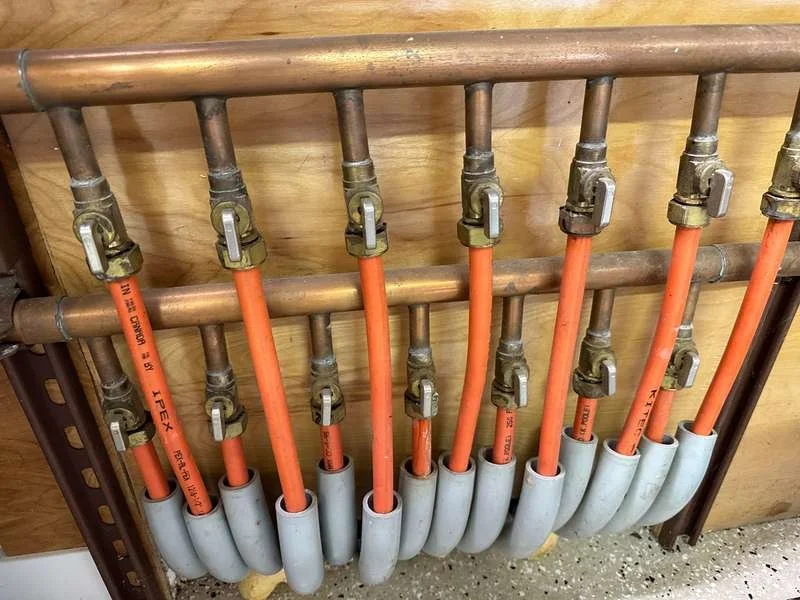
Hydronic radiant floor heating manifold featuring orange Kitec (IPEX) tubing connected to copper headers in a Halifax Regional Municipality (HRM) home. Kitec plumbing systems were installed across Nova Scotia properties from 1995 to 2007, which require professional inspection for dezincification corrosion and potential replacement.
Frequently Asked Questions (Q&A)
1. Is Kitec plumbing guaranteed to fail?
Industry experts treat failure as a matter of when, not if. Because high heat and pressure accelerate wear on brass fittings and polymer layers, every Kitec system degrades over time. Even if a system has not leaked yet, age increases the risk of sudden line bursts.
2. How much does it cost to replace Kitec plumbing in a Halifax home?
In the Halifax Regional Municipality, replacing Kitec typically ranges between $5,000 and $15,000+ depending on property size and configuration. Single-family homes with finished drywall, multiple bathrooms, or hydronic in-floor heating sit at the higher end because of the drywall restoration involved.
3. Can I still claim money from the official Kitec class-action lawsuit?
No. The official Canada/US Kitec Class Action Settlement fund claim deadline passed in 2020, and all funds have been distributed. Any replacement costs now fall directly on the property owner.
4. What should I do if I find Kitec during a home inspection?
If you are buying a home, contact your home insurance broker immediately to check their terms. Obtain a detailed replacement quote from a licensed Red Seal plumber in Halifax. You can then use this quote to negotiate repair credits, price adjustments, or seller replacement before taking ownership.
Protect Your Home from Kitec Leaks
If you suspect your Halifax home contains Kitec plumbing, don't wait for a burst pipe or an insurance cancellation notice.
Contact our team today and we will connect you with a licensed Red Seal plumber to schedule a comprehensive plumbing inspection and receive a free, zero-obligation Kitec replacement estimate for your home.
