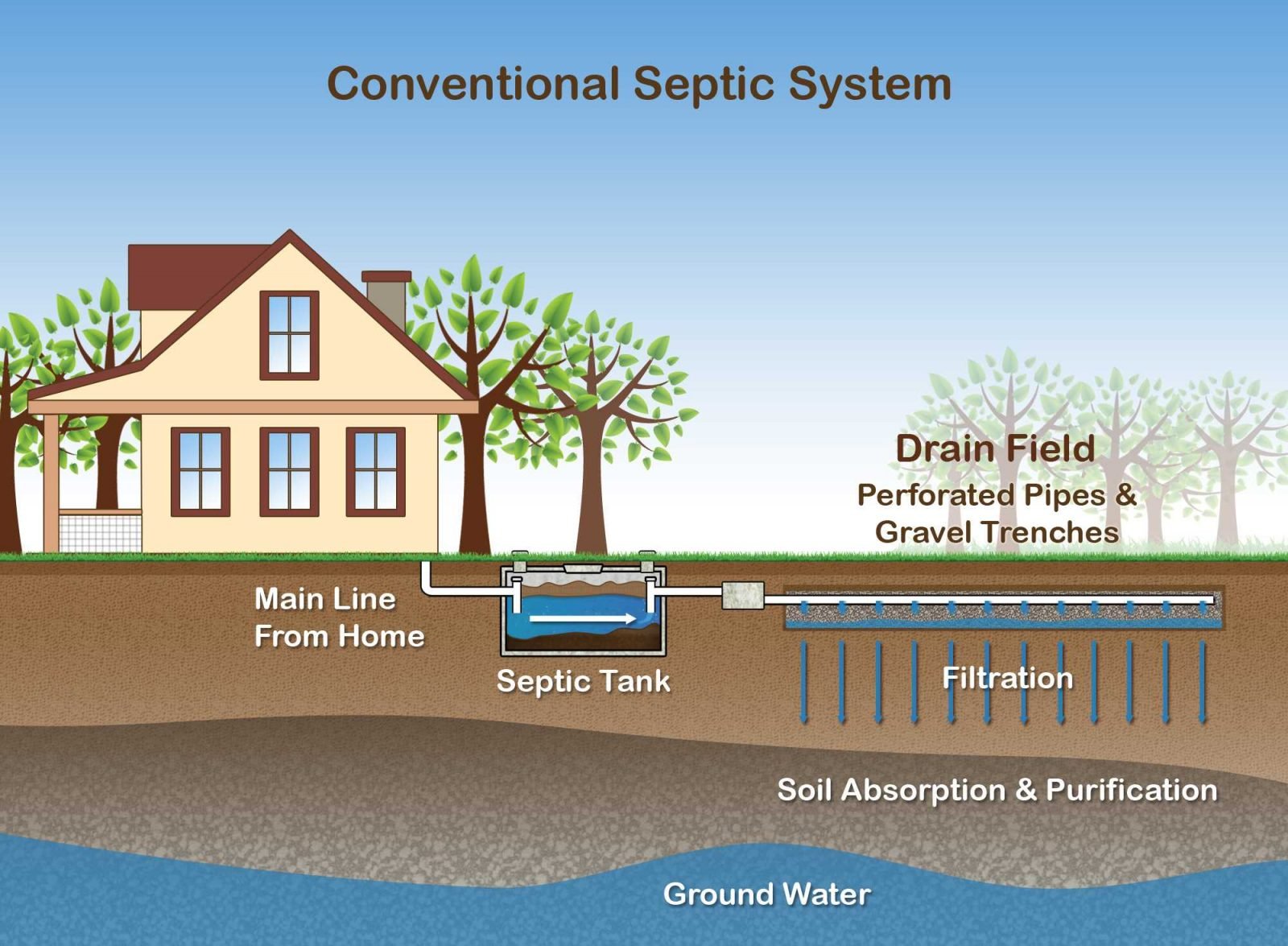
A clear cross-section visual detailing how a conventional Halifax residential septic system works, from the household main line to the septic tank, gravel trench drain field, and ground water filtration.
Imagine finding your dream home just 25 minutes outside downtown Halifax, surrounded by trees in Hammonds Plains, Porters Lake, or Fall River. But a few weeks after moving in, your shower pressure dies, or your backyard turns into a soggy nightmare, accompanied by an unexpected $30,000 repair bill.
When you buy a property outside Halifax Water’s utility coverage, you step away from municipal city services and become your own private utility manager.
City Services vs. Private Utilities in Halifax Regional Municipality (HRM)
In urban Halifax or Dartmouth, Halifax Water delivers treated municipal water and carries away your wastewater. You pay a quarterly utility bill, and municipal infrastructure handles maintenance.
On a rural property in Nova Scotia, you own the entire water supply and waste disposal system on your lot:
The Well: Pulls groundwater directly from underground aquifers for household use.
The Septic System: Acts as an underground wastewater treatment system, breaking down waste and dispersing clean liquid back into your soil.
While private services eliminate water bills, the homeowner bears 100% of the financial responsibility for maintenance, water quality safety, and repairs.
Drilled Wells vs. Dug Wells in Nova Scotia
Nova Scotia properties feature two main types of water wells:
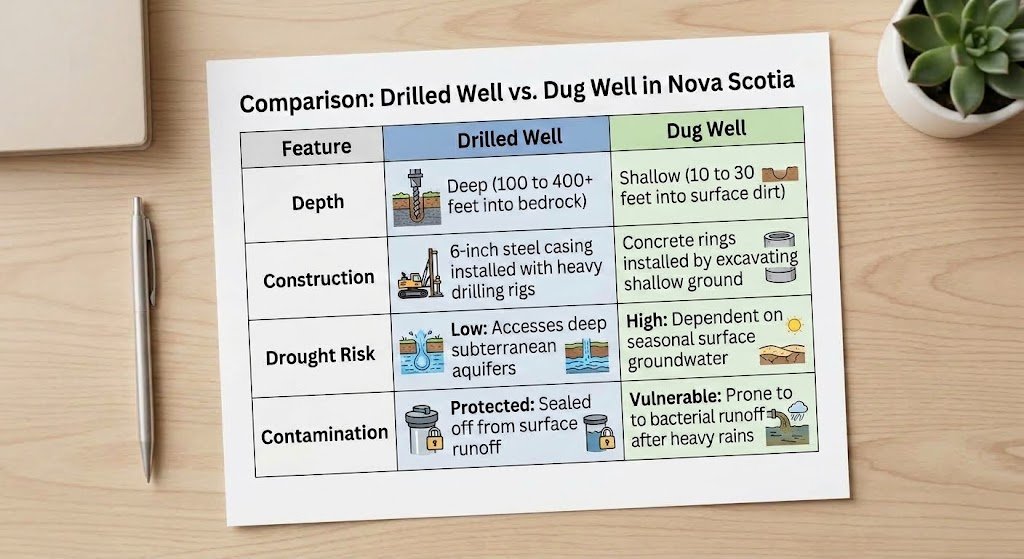
An overhead photograph of an educational chart comparing the characteristics, construction, and risks of drilled wells and dug wells commonly found in Nova Scotia. The chart is placed on a light wood desk with a pen and succulent.
While dug wells remain common on historical Maritime properties, drilled wells are the modern standard for long-term water security and higher resale value in Halifax.
3 Critical Inspections You Must Get Before Buying
Never rely solely on a standard general home inspection when buying a well and septic property in HRM. Always include three specialized inspection conditions in your Agreement of Purchase and Sale:
1. Well Water Quality Analysis
Nova Scotia Health recommends testing well water for both biological and chemical parameters:
Bacteriological Test: Checks for total coliforms and E. coli. (Mortgage lenders will not release funds without a clear potability certificate).
Chemical & Heavy Metals Test: Checks for regional minerals including arsenic, uranium, lead, iron, manganese, and nitrates.
2. Well Yield & Recovery Test
A flow test pumps the well at a sustained rate (typically 4 to 5 gallons per minute) over 1 to 2 hours while measuring drawdown and recovery speeds. This confirms whether the well produces sufficient water volume for standard household appliances, showers, and laundry.
3. Comprehensive Septic System Inspection
A certified Nova Scotia septic inspector locates the septic tank, inspects internal baffles, performs a camera scope of the sewer lines, and evaluates the drain field (leach field) for signs of saturation or structural failure.
Common Issues & Treatment Remedies
If an inspection uncovers an issue, most well and septic challenges can be corrected before closing:
Bacterial Contamination (E. coli / Coliforms): Resolved by shock chlorinating the well ($200–$500) or installing a permanent Ultraviolet (UV) Light Disinfection System ($1,000–$2,500).
Heavy Metals or Hard Water (Arsenic, Hardness, Iron): Treated via targeted Reverse Osmosis (RO) units, iron filters, or water softeners ($1,500–$5,000).
Low Water Volume: Improved by hydrofracturing rock fissures, drilling deeper, or adding an indoor water storage tank system ($3,000–$8,000+).
Failing Septic System: Minor fixes (pumping or replacing a baffle) cost a few hundred dollars. Replacing an entire failed disposal field in Nova Scotia ranges from $15,000 to over $40,000 depending on soil composition and engineering requirements.
Impact on Your Real Estate Transaction
Purchase Conditions: Ensure your Realtor includes clear condition clauses allowing 7 to 10 business days for water testing, well flow verification, and septic inspection.
Mortgage Lenders: Canadian banks require a passed bacteriological water test before releasing loan funds.
Negotiations & Price Reductions: If an inspection uncovers a $4,000 water filtration requirement or a failing septic tank, you can negotiate seller repairs, request a price reduction, or establish a financial escrow holdback at closing.
Contract Termination: If a seller refuses to remedy a severely compromised system, properly written inspection conditions give you the legal right to exit the transaction with your deposit returned in full.
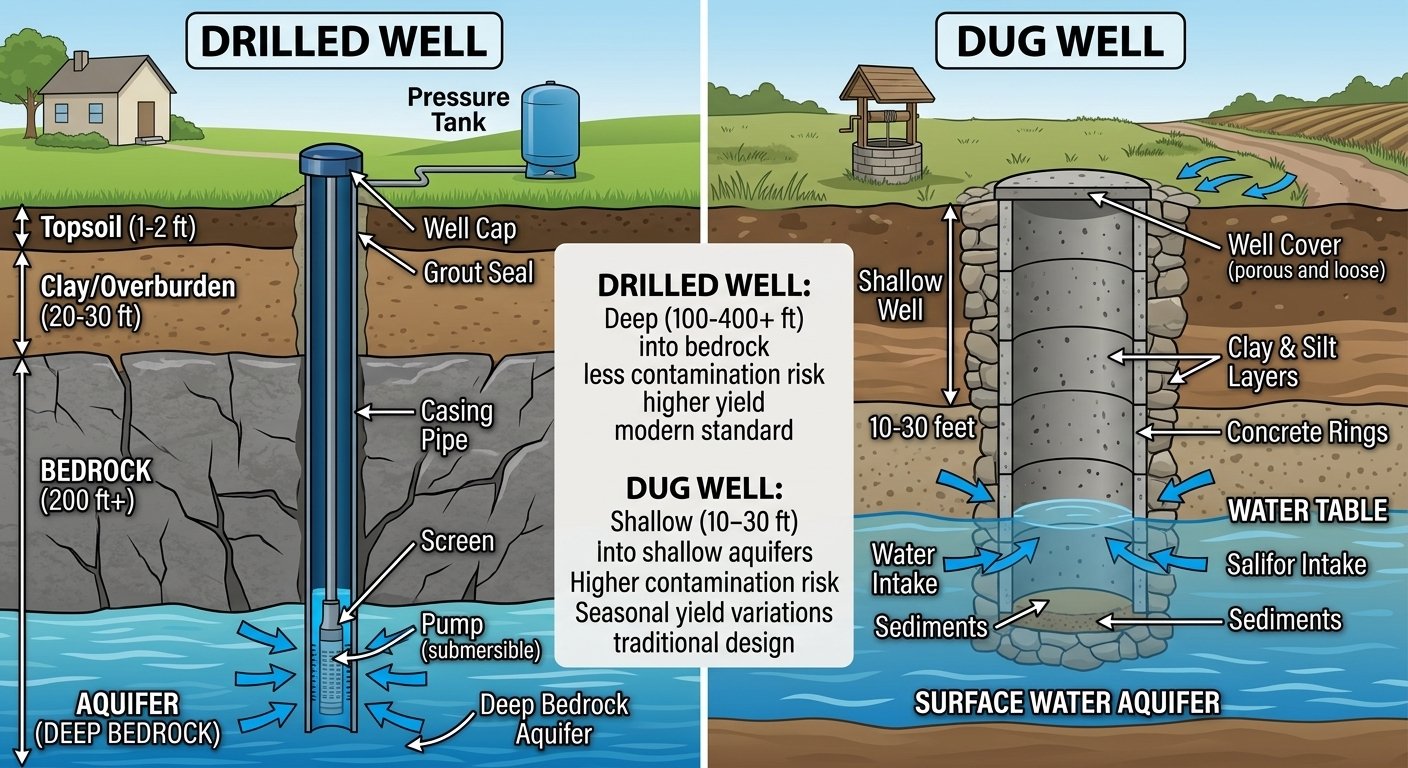
A detailed cross-section illustration showing the structural differences between a drilled well (deep, sealed casing, bedrock aquifer) and a dug well (shallow, concrete rings, surface water table).
❓ Frequently Asked Questions (AEO & Local Buyers Q&A)
Q1: What water tests are required when buying a home on a well in Halifax, Nova Scotia?
Answer: Homebuyers in Nova Scotia should conduct two primary water tests: a Bacteriological Analysis (testing for E. coli and coliform bacteria) and a Chemical & Heavy Metals Analysis (testing for arsenic, uranium, lead, iron, and nitrates). Canadian mortgage lenders require a clear bacteriological water certificate before releasing funds on closing day.
Q2: How much does a septic inspection cost in Halifax, NS?
Answer: A comprehensive septic system inspection in the Halifax Regional Municipality typically costs between $400 and $800, depending on whether tank uncovering, camera line scopes, or hydraulic loading tests are required.
Q3: How often should you pump a septic tank in Nova Scotia?
Answer: According to Nova Scotia environmental guidelines, a residential septic tank should be pumped and professionally inspected every 3 to 5 years for a standard family household to prevent sludge buildup from clogging the leach field.
Q4: Can you get a mortgage in Nova Scotia if the well water test fails?
Answer: No. Most Canadian lenders and mortgage insurers (CMHC, Sagen, Canada Guaranty) require a clear, potable water test result before funding a mortgage. If a test fails for bacteria, the well must be shocked or equipped with a UV treatment system and re-tested before closing.
Ready to Find Your Dream Rural Home in Halifax?
Navigating rural real estate transactions doesn't have to be overwhelming. With the right condition clauses, local inspection experts, and proper guidance, you can purchase your Nova Scotia sanctuary with complete confidence.
Planning a move to Fall River, Hammonds Plains, St. Margaret's Bay, or Eastern Shore? Contact me today to ensure your next home purchase is fully protected from well to septic!
