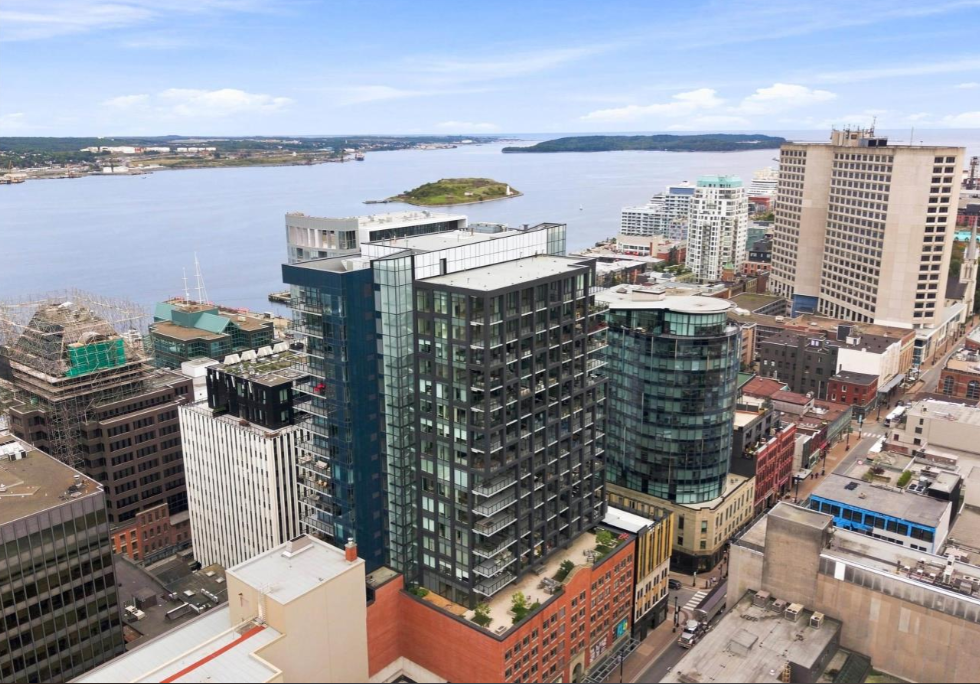
Downtown Halifax condo developments along the waterfront.
If you tracked the real estate market in the Halifax Regional Municipality (HRM) over the past few years, condominiums were among the hottest commodities in Atlantic Canada. Fueled by low interest rates, tight housing supply, and a flood of out-of-province buyers, condo values surged in neighborhoods from Downtown Halifax to Dartmouth.
Fast forward to 2026, and the narrative has shifted dramatically. While detached single-family homes across Greater Halifax maintain steady growth, projected at roughly +4% annual appreciation, the condo sector is undergoing a reset. Royal LePage reports that while single-family detached homes remain flat to slightly up, aggregate condo values in Halifax are experiencing a -2.0% to price dip, with some smaller segments softening even further.
What went wrong in the Halifax condo market? Why are 1-bedroom units sitting on the market for months? Below is a data-backed breakdown of the shift, strategies for sellers attempting to maximize their return, and advice for buyers looking to step into the market.
Why Halifax Condos Are Softening in 2026
The shift in condo popularity isn't due to a lack of interest in living in Halifax; it stems from policy shifts, rising ownership overhead, and changing inventory levels.
1. The 10% Non-Resident Deed Transfer Tax Penalty
For years, a notable portion of condo buyer demand in Downtown Halifax came from out-of-province parents primarily from Ontario, British Columbia, and Alberta buying units for their children attending Dalhousie University, Saint Mary’s University, or the University of King’s College.
However, the Province of Nova Scotia increased the Non-Resident Provincial Deed Transfer Tax (PDTT) to 10%. When combined with Halifax’s 1.5% municipal deed transfer tax, out-of-province buyers face a heavy tax penalty at closing:
Closing Cost Calculation Example:
Purchase Price: $500,000 condo unit
Municipal Tax (1.5%): $7,500
Provincial Non-Resident Tax (10%): $50,000
Total Tax Payable at Closing: $57,500
An extra $50,000 upfront tax significantly altered the "buy a student condo instead of paying rent" equation. Out-of-province parents and investors retreated, taking out a major source of buyer demand for small urban condos.
2. High Monthly Fees vs. Mortgage Rate Adjustments
When mortgage interest rates sit above historic lows, buyers become payment-focused. While a $400,000 condo might seem cheaper than a $550,000 semi-detached home on paper, adding $400 to $700+ per month in condo fees alters the debt-service calculation. That monthly condo fee directly eats into a buyer’s borrowing power, causing many buyers to lean toward freehold townhomes or semi-detached properties where they control their monthly upkeep costs.
3. Inventory Accumulation and Absorption
During peak years, inventory was tight. In 2026, active condo listings in HRM have expanded significantly. With the market absorption rate hovering around 35%, nearly two-thirds of active listings remain available at any given time, giving active buyers much more leverage.
The 1-Bedroom Trap: Days on Market (DOM) Disparities
While larger 2-bedroom units remain somewhat resilient, 1-bedroom condos face the longest selling times across Halifax.
Space Requirements: First-time local buyers in 2026 frequently require flexible space for remote work. A 550-square-foot 1-bedroom floor plan rarely accommodates two working professionals or a work-from-home desk setup.
Squeezed Yields for Investors: Tightened municipal regulations on short-term rentals, paired with higher interest rates and elevated condo fees, reduced investor cash flow on smaller units.
Stagnant Pricing: While sold homes in Halifax average around 38 days on market, active listings, which are heavily populated by smaller 1-bedroom units, often sit for 80+ days if listed with outdated pricing expectations.

A modern, staged 1-bedroom condo interior demonstrating functional living space.
How to Maximize Your Sale as a Seller
Selling a condo in HRM today requires a realistic, data-driven approach rather than relying on historical bidding wars. With over 60% of homes in Halifax closing below asking price, consider these four steps:
Focus on the First 20 Days: Buyer attention is highest during the first three weeks online. Overpricing a listing with plans to "test the market" often leads to long exposure, carrying a market stigma that leads to lower final offers.
Provide Transparent Reserve Fund Documentation: Buyers in 2026 want to avoid unexpected special assessments or abrupt fee increases. Providing a healthy, recent Reserve Fund Study upfront reassures nervous purchasers.
Invest in Professional Staging: Empty 1-bedroom layouts can feel cramped. Staging visually defines functional zones (showing where a dining table or work-from-home nook fits), making smaller footprints feel functional.
Target Local Working Professionals: Align marketing materials toward local healthcare workers, university faculty, young professionals working downtown, or local downsizers rather than relying on out-of-province buyers.
Key Considerations for Buyers Entering the Halifax Market
For prospective buyers, the 2026 market offers a far more balanced environment than past years.
Target Aged Inventory: Properties sitting on the MLS past 60 days often belong to sellers open to price negotiations, closing fee adjustments, or flexible move-in dates.
Reintroduce Conditions: Conditional offers, specifically financing and inspection clauses, have returned as the standard in Halifax transactions. Never waive an inspection on a condo; inspect common elements, roofs, HVAC systems, and board meeting minutes carefully.
Evaluate 2-Bedroom Layouts: If budget allows, 2-bedroom units or 1-bed plus den layouts provide better long-term resale liquidity and holding power.
Review Tax Exemption Rules: If you are relocating to Nova Scotia from another province, you can qualify for an exemption or refund on the 10% Non-Resident Deed Transfer Tax if you establish primary residency within six months of closing. Always verify terms with a local real estate lawyer prior to waiving conditions.

Nova Scotia Premier Tim Houston, whose government implemented the provincial 10% Non-Resident Deed Transfer Tax.
Frequently Asked Questions (Q&A)
Q1: Are condo prices in Halifax expected to crash in 2026?
A: No, a total market crash is not occurring. The market is experiencing a normalization or "Great Reset". While detached single-family homes continue to appreciate steadily at ~3% to 5%, royal LePage forecasts a mild price correction for condominiums around -2% year-over-year as supply balances out buyer demand.
Q2: How does the 10% Non-Resident Deed Transfer Tax impact out-of-province buyers?
A: Non-residents buying residential property in Nova Scotia face a 10% provincial tax on top of the local municipal transfer tax (1.5% in Halifax). On a $400,000 condo, this adds $40,000 in provincial tax, bringing total closing taxes to $46,000 unless the buyer establishes primary residency in Nova Scotia within six months of closing.
Q3: Why are 1-bedroom condos sitting on the market longer in Halifax?
A: 1-bedroom units face lower demand due to high monthly condo fees impacting affordability, decreased interest from out-of-province student parents owing to transfer taxes, and changing local buyer preferences favoring larger layouts or work-from-home spaces.
Q4: Is 2026 a good time to buy a condo in the Halifax Regional Municipality (HRM)?
A: Yes, for long-term buyers, 2026 presents an advantageous entry point. Buyers benefit from higher inventory levels, reduced competition, lower asking prices on aged listings, and the ability to include financing and inspection contingencies.
Conclusion & Next Steps
The 2026 Halifax condo market rewards strategy over speculation. Whether you are a seller needing to position your unit properly or a buyer looking to secure a fair price, understanding local market data is critical.
Are you planning to buy or sell a condo in Halifax or Dartmouth this year? Contact Me Today for a complimentary property valuation or a strategy session tailored to the current 2026 market.
For further visual context on these recent housing market changes, see The Rise & Fall of Halifax Condos: Why 1-Bedroom Units Aren’t Selling on YouTube which covers the exact shifting numbers across the HRM condo sector.
