Why Dual Agency is Outlawed in Nova Scotia Real Estate (NSREC Rules)
Buying or selling a home in Nova Scotia is one of the largest financial decisions you will ever make. Whether you are hunting for a oceanfront property on the South Shore or selling a condo in downtown Halifax, you expect your real estate professional to advocate fiercely for your financial interests.
However, many buyers and sellers are surprised to learn that a single real estate agent cannot represent both the buyer and the seller in the same transaction in Nova Scotia.
This practice, known as dual agency, is strictly banned under the Nova Scotia Real Estate Commission (NSREC) regulations to protect consumers. Here is a look at why dual agency was outlawed across the province, how the rules work today, and what it means for your next move.

A legal photo of a wooden gavel resting on real estate regulation documents in a office overlooking the Halifax harbour and bridge.
What is Dual Agency?
Dual agency occurs when a single real estate licensee (or a single brokerage operating under traditional common-law agency) attempts to act as a full fiduciary agent for both the buyer and the seller in the exact same deal.
Under a traditional agency agreement, a real estate professional owes their client complete loyalty, absolute confidentiality, full disclosure, and aggressive negotiation advice.
The Inherent Conflict of Interest
In any real estate sale, the goals of the seller and the buyer are opposing:
The Seller wants the highest possible price, the fewest contingencies, and maximum profit.
The Buyer wants the lowest possible price, comprehensive inspection protections, and maximum value.
An agent cannot offer 100% undivided loyalty to a seller trying to maximize profit while simultaneously advising a buyer on how to negotiate the price down. Expecting one person to advocate for both sides is a direct conflict of interest.
Why Nova Scotia Outlawed Dual Agency
The Nova Scotia Real Estate Commission (NSREC) eliminated traditional dual agency to ensure consumers always receive dedicated representation without compromised standards.
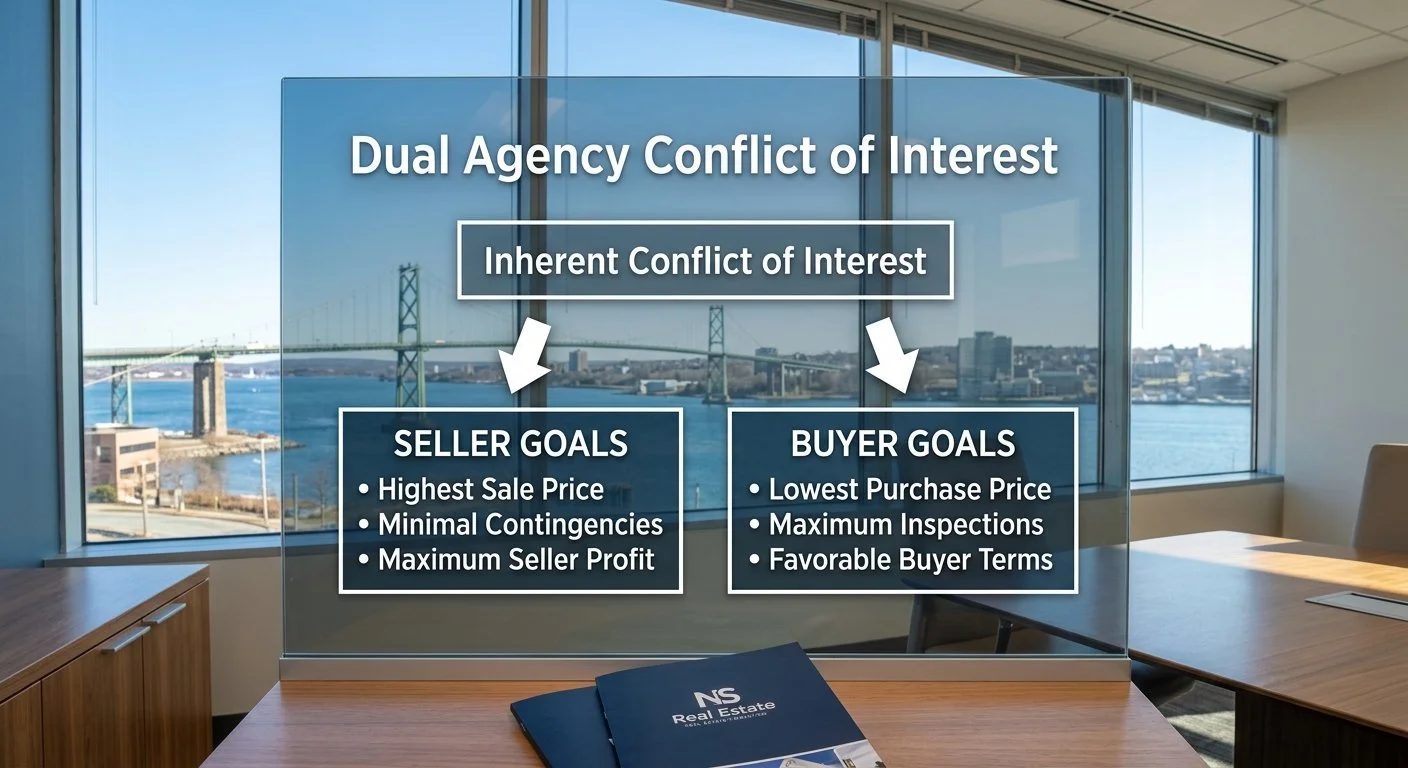
An infographic on a glass panel in a Halifax office displaying a diagram that outlines the conflict of interest in dual agency between buyer and seller goals.
The provincial regulator phased out dual agency due to three main vulnerabilities:
1. Compromised Confidentiality
In a dual agency setup, the agent inevitably learns confidential details about both sides—such as the seller's bottom line or how high the buyer is willing to bid. Under strict fiduciary duty, sharing or concealing this information creates an ethical dilemma.
2. Loss of Negotiation Advice
If an agent represents both sides, they can no longer give strategic negotiation advice to either party. They are stripped of their ability to say, "That price is too high," or "We should push back on these inspection requests."
3. "Double-Dipping" Incentives
Historically, dual agency created financial incentives for agents to collect the full commission from both sides of the transaction, which could tempt an agent to push a deal through rather than protect the best interests of their client.
How Representation Works in Nova Scotia Today
To replace dual agency and maintain high consumer protection standards, Nova Scotia adopted modern brokerage models:
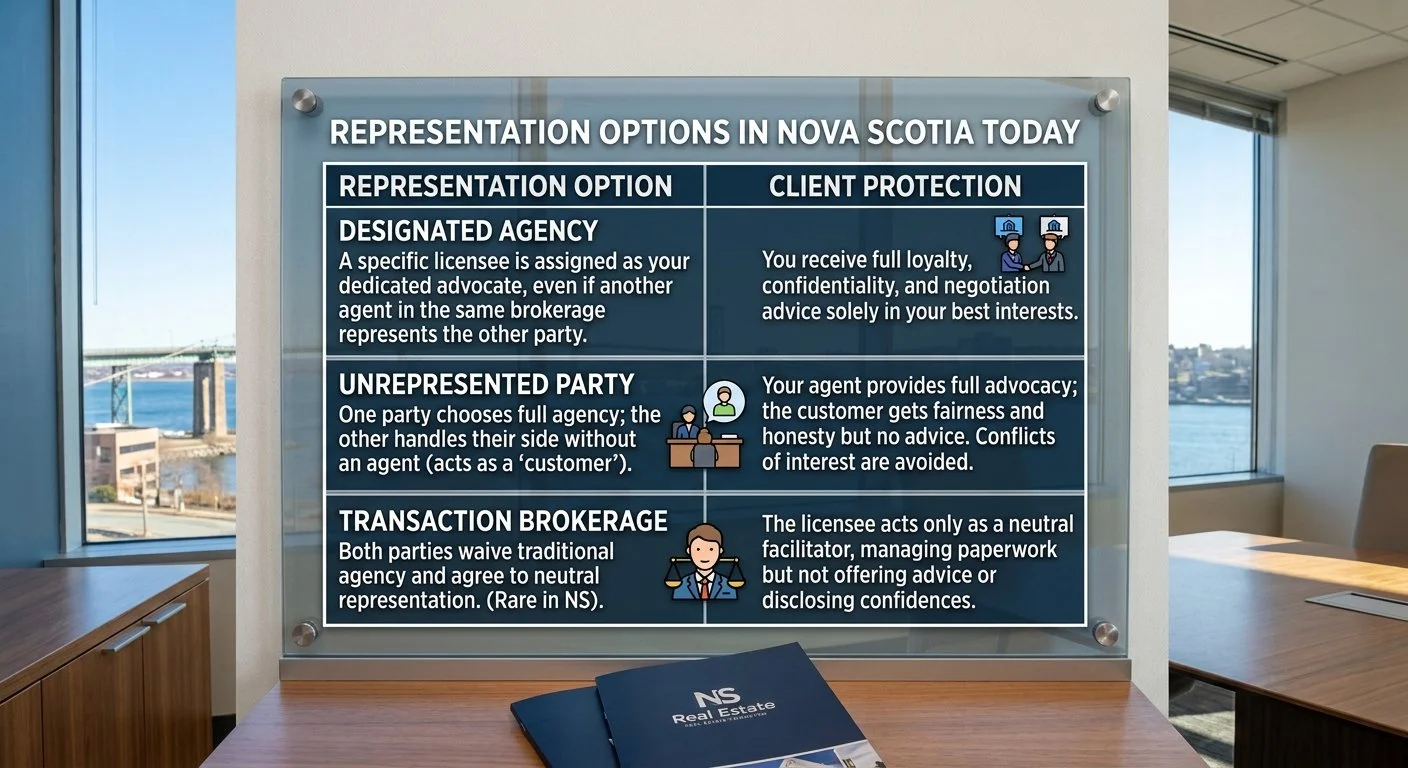
An infographic mounted on a glass wall in an office detailing Nova Scotia's real estate representation models: Designated Agency, Unrepresented Party, and Transaction Brokerage.
Frequently Asked Questions (Q&A)
Q1: Can two agents working for the same brokerage represent the buyer and seller on the same home in Nova Scotia?
Yes. Under Nova Scotia’s Designated Agency model, two different licensees within the exact same brokerage can represent opposing sides in a transaction. Agent A represents the seller, and Agent B represents the buyer. Both agents owe undivided loyalty and confidentiality exclusively to their respective clients.
Q2: What happens if I want to make an offer on a home listed by my own agent?
If your agent lists a home you want to buy, a direct conflict occurs because one agent cannot represent both sides. Your agent must address this conflict immediately. Usually, they will refer you to another designated agent to represent you on that specific transaction, or you may choose to proceed as an unrepresented party (customer).
Q3: What is an "Unrepresented Party" in Nova Scotia real estate?
An unrepresented party (or customer) is someone who chooses not to enter into a client relationship with a real estate licensee. If you tour an open house without an agent and make an offer directly through the listing agent, that agent represents the seller's interests, not yours. They must treat you fairly and honestly, but they cannot give you negotiation advice or protect your financial interests.
Q4: Is Transaction Brokerage the same thing as Dual Agency?
No. While both involve one licensee interacting with both buyer and seller, they are fundamentally different. Dual agency falsely promises full advocacy to two competing sides. Transaction brokerage removes agency representation altogether: the licensee acts solely as a neutral facilitator, managing paperwork without offering strategic advice to either party.
Get Dedicated Representation for Your Next Nova Scotia Home Sale or Purchase
Navigating the real estate market in Nova Scotia requires clear guidance, dedicated advocacy, and full transparency. Whether you are purchasing your first home in HRM, downsizing in Truro, or selling an investment property in Annapolis Valley, working with a designated agent ensures your interests always come first.
Ready to buy or sell with 100% undivided loyalty on your side?
Contact me today for a free, no-obligation consultation on your local real estate goals!
