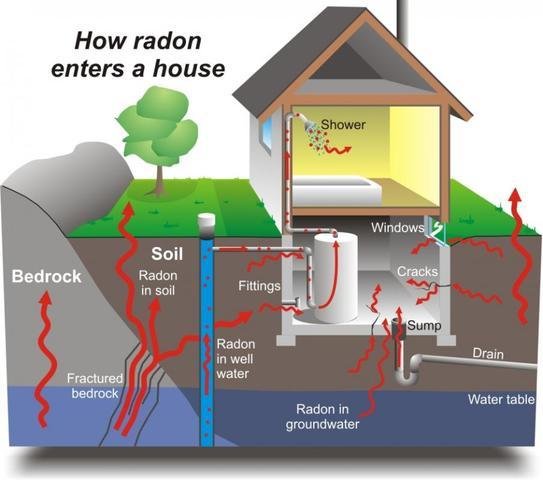
An educational cross-section diagram demonstrating how radon gas originates in underground bedrock and soil. It highlights key entry routes into a house, including basement foundation cracks, sumps, plumbing fittings, and well water.
If you own or are looking to buy a home in Nova Scotia, there is an invisible element beneath the surface that deserves your attention: radon gas.
Nova Scotia boasts stunning coastal views and rich geology, but that same geology makes our province one of the most prone to elevated indoor radon levels in Canada. Here is a complete breakdown of what radon is, why local levels are so high, what testing and remediation cost, and how it plays into local real estate transactions.
What Is Radon Gas, and Why Is Nova Scotia a Hotspot?
Radon is a naturally occurring, radioactive gas produced by the decay of uranium in soil and rock. It is invisible, odorless, and tasteless. When radon escapes the ground into the open air, it dilutes quickly and poses little health risk. However, when it enters an enclosed space, like a home through basement floor cracks, sump pits, or construction joints, it can build up to dangerous concentrations.
Why Nova Scotia?
Nova Scotia's bedrock is rich in uranium-bearing granite and slate deposits. According to the Health Canada Cross-Canada Survey of Radon, approximately 36.8% of Nova Scotia homes exceed the Health Canada safety guideline of 200 Becquerels per cubic metre (Bq/m3) More than double the national Canadian average of 17.8%. In high-risk geological areas of the province, over 50% of tested homes test above safety thresholds.
Health Implications:
Long-term exposure to elevated radon is the second leading cause of lung cancer in Canada (and the leading cause among non-smokers), contributing to over 100 deaths annually in Nova Scotia alone.
The Nova Scotia Radon Risk Map: A Useful Guide, Not a Guarantee
The Department of Natural Resources maintains an interactive Nova Scotia Radon Risk Map that classifies areas across the province into High, Medium, and Low potential risk zones based on underlying geological formations.
While the risk map is a helpful tool for general awareness, it cannot tell you whether your specific house is safe.
As the data shows, nearly 1 in 5 homes in "Low Risk" areas still test above the safety threshold. Radon levels vary significantly from house to house, even between next-door neighbors due to micro-cracks in the foundation, foundation type, soil permeability, and home ventilation. The map is a regional guide; direct testing is the only way to know your home's actual radon level.
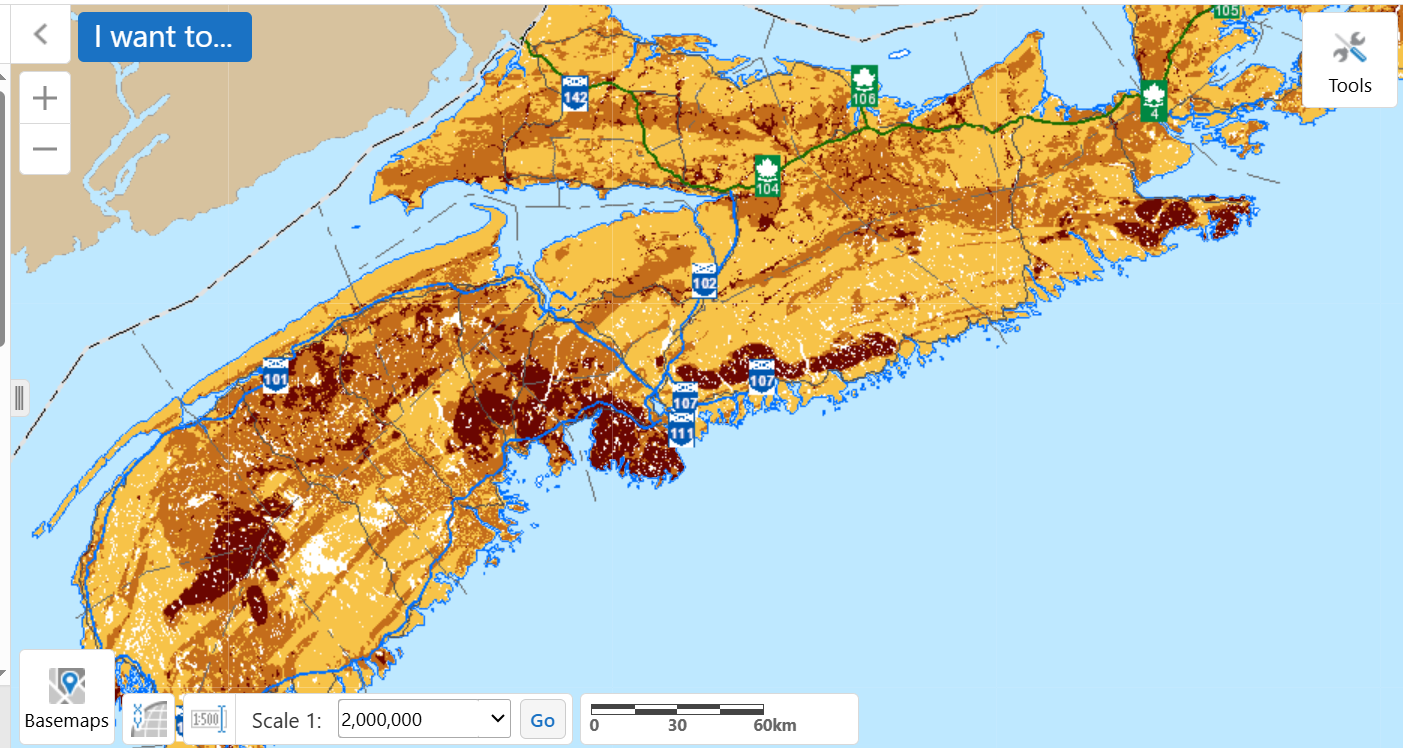
An interactive geological risk map of Nova Scotia mapping regional radon potential zones in varying shades of brown and orange. It displays major provincial highways and coastal regions to help homeowners assess potential local radon risks.
Testing & Inspection Costs in Nova Scotia
Testing is the only way to know if a home has high radon levels, as age, building style, and neighborhood do not guarantee low levels.
Long-Term DIY Test Kits ($40 – $60): Health Canada recommends a long-term test lasting 90 days or more during the heating season (fall/winter) when homes are closed up. Kits can be purchased through organizations like LungNSPEI or home improvement stores.
Free Testing Options: Nova Scotians can borrow digital monitors from public libraries for temporary screening or apply for free kits through provincial low-income assistance programs.
Professional Short-Term Real Estate Screening ($150 – $300): During a home purchase, a 48-to-96 hour active continuous monitor test conducted by a C-NRPP (Canadian National Radon Proficiency Program) professional is used to evaluate real-time levels quickly.
Remediation & Mitigation Costs
If test results exceed 200 Bq/m3, installing a radon mitigation system is strongly recommended.
Active Sub-Slab Depressurization ($1,500 – $3,000): This is the gold standard for mitigation. A certified contractor drills a suction pit in the concrete basement floor, installs a PVC pipe, and mounts a specialized continuous fan that draws gas from beneath the foundation and safely vents it above the roofline.
Financial Assistance: Nova Scotia offers targeted support, such as the LungNSPEI Radon Mitigation Fund, which provides grants up to $2,500 for eligible low- to moderate-income households needing professional remediation.
How Radon Affects Nova Scotia Real Estate Transactions
Radon has become a standard consideration in Nova Scotia real estate contracts. Here is how buyers and sellers typically navigate it:
Purchase Conditions: Buyers frequently include a radon testing clause alongside the standard building inspection condition.
Short-Term Screening Protocols: Because real estate transactions operate on tight closing timelines, buyers usually rely on a certified 48-to-72 hour continuous monitor test.
Negotiations & Holdbacks:
Direct Price Reduction/Credit: Sellers may offer a price reduction or credit ($2,000 – $3,000) at closing to cover future mitigation.
Seller Mitigation: Sellers agree to hire a C-NRPP-certified installer to remediate the property before the closing date.
Holdback Agreement: Lawyers set aside $2,500 to $3,000 while the buyer conducts a proper long-term test post-closing. If levels exceed 200 Bq/m3, funds are released to install a system.
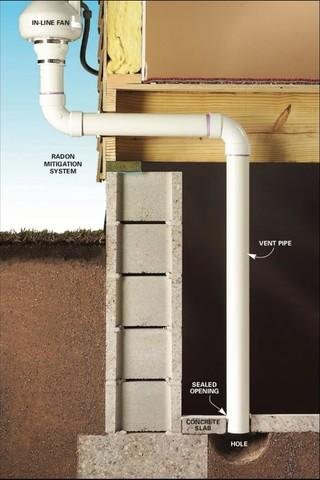
A cross-section diagram showing how an active sub-slab depressurization system vents radon gas from beneath a concrete slab foundation. It details the suction point through the basement floor, PVC piping, and exterior in-line fan that safely vents gas outdoors.
Questions & Answers (Q&A)
Q: Can new-build homes in Nova Scotia have high radon levels?
A: Yes. While the National Building Code in Nova Scotia requires new homes to include a vapour barrier and a radon rough-in pipe, newer homes are often sealed tighter than older homes, which can trap trapped soil gases if a mitigation fan is not active.
Q: Will installing a radon system lower my home’s property value?
A: No. In fact, an active radon system reassures buyers that the home has safe indoor air quality, removing radon as a potential friction point during future resale.
Q: What if my neighbor’s test came back clean, do I still need to test?
A: Yes. Radon levels vary significantly from house to house based on micro-geology, foundation cracks, ventilation, and living habits. Your neighbor's low score is not a guarantee for your home.
Protect Your Home and Peace of Mind
Don't leave your indoor air quality to chance. Whether you are a homeowner looking out for your family’s health or a homebuyer negotiating a property purchase, testing for radon is simple, accurate, and manageable.
Ready to ensure your home is safe? Order a long-term test kit today or contact a C-NRPP certified home inspector or radon mitigation specialist to test your property.
Check out My Full YouTube Video on this subject!
