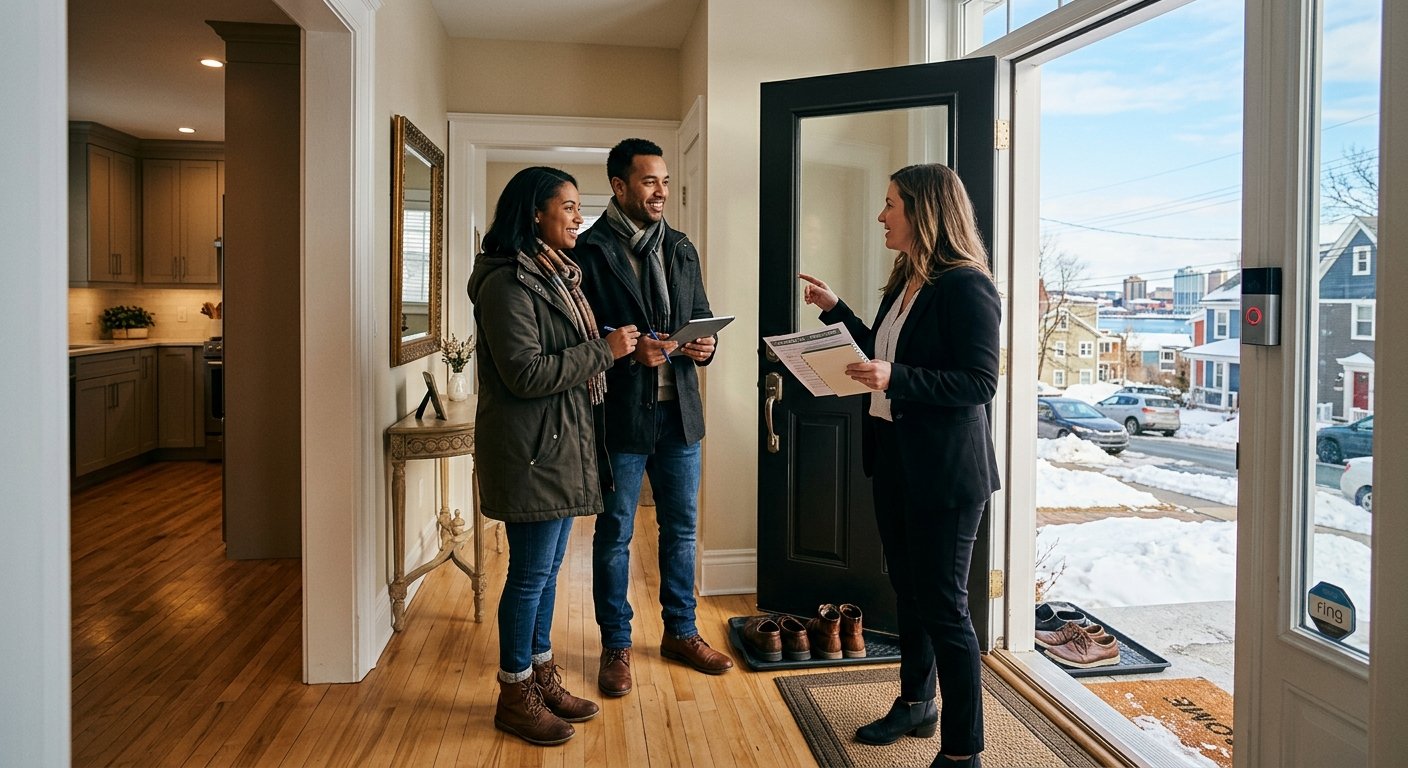
A couple exploring a modern residential home in Halifax alongside their real estate agent during a property tour. This image highlights house hunting in Nova Scotia, capturing the real estate walkthrough process.
Stepping inside prospective properties is easily the most exciting part of buying your first home in Halifax. After weeks of reviewing MLS listings, running mortgage calculators, and talking budgets, you finally get to turn the key and explore real houses in real neighborhoods across the Halifax Regional Municipality (HRM).
However, a property walkthrough is more than just a casual walkthrough—it’s an evaluation step where simple mistakes can cost you money, privacy, or negotiating power.
Whether you’re touring modern townhomes in Bedford, historic flats on the Halifax Peninsula, or detached split-entries in Dartmouth, here is your definitive guide to navigating in-person property tours like a seasoned pro.
1. Viewing Etiquette: Built-In Storage vs. Personal Belongings
When walking through someone’s private residence, maintaining decorum is crucial. The easiest way to navigate home viewing etiquette is understanding the difference between Real Property (the structure) and Personal Property (the seller's belongings).
What is fair game to inspect?
You have every right to check integrated storage to see if your lifestyle and belongings will fit the space:
Kitchen and bathroom cabinetry
Built-in hallway and bedroom closets
Walk-in pantries and linen closets
Basement storage rooms and utility spaces
What is strictly off-limits?
Standalone furniture (dressers, nightstands, armoires)
Medicine cabinets and bathroom drawers
Desk drawers and filing cabinets
Clothes hampers and personal totes
Opening a seller's personal dressers won't tell you if the foundation is structurally sound, but it will create unnecessary awkwardness. Keep your inspections strictly limited to items attached to the home.
General House Rules for Tours
Always Remove Your Shoes: Halifax weather brings rain, slush, and salt. Always slip your shoes off at the front door immediately.
Supervise Children & Pets: Keep children close to prevent accidental damage to a seller's staged decor or personal items.
Respect Your Time Window: Showings are scheduled in precise 30- to 60-minute windows via the MLS system. Arriving late or staying past your slot disrupts sellers, pets, and following viewings.
2. The Smart Home Surveillance Trap
The single most common mistake Halifax home buyers make during a property tour is speaking candidly inside or near the front entrance.
With smart home tech commonplace across the HRM, assume every home features active audio and video monitoring—from Ring doorbells at the front entry to Nest cameras in the living room.
How Smart Cameras Can Ruin Your Offer
Revealing Your Hand: If you step onto the front porch and say, "I love this place, we should offer $40,000 over asking price," the seller may hear the recording. You have just eliminated your agent's negotiating room.
Insulting the Seller: Making harsh comments like "This kitchen renovation is hideous" can insult the seller. Sellers are human, and an offended homeowner may refuse your offer purely out of spite.
Pro Tip: Maintain a professional poker face throughout the entire tour. Save all strategic discussions, pricing evaluations, and emotional reactions for when you are safely inside your real estate agent's vehicle.

A security camera perspective capturing someone looking through personal items on a desk inside a residential bedroom. This image highlights property viewing etiquette and privacy mistakes buyers must avoid during open houses.
3. Nova Scotia Specific Red Flags to Inspect
Staging is designed to draw your eye toward pretty pillows, art, and light fixtures. Your goal on a walkthrough is to look past decor and inspect the core structural and mechanical components of the property.
In coastal Nova Scotia, pay specific attention to these four items:
1. Basements & Moisture Intrusion
Halifax experiences heavy coastal rain and rapid freeze-thaw cycles. In older neighborhoods like North End Halifax or Central Dartmouth, check basement walls for efflorescence—a powdery white mineral deposit left behind when moisture evaporates through concrete. Take note of any damp, musty smells.
2. Heating Systems & Fuel Tanks
Heating is a major operating expense in Nova Scotia homes.
Oil Systems: Locate the metal tag on the fuel tank. Insurance companies in Nova Scotia typically mandate replacement every 10 to 15 years, regardless of visual condition. An expired tank means an immediate out-of-pocket replacement cost.
Ductless Heat Pumps: Note the number, age, and placement of heat pump heads. They provide efficient winter heating and essential summer cooling.
3. Electrical Panels
Ensure the home features a modern circuit breaker panel with 100-to-200-amp capacity. In older homes built prior to 1970, have your agent check for outdated elements such as knob-and-tube wiring, aluminum wiring, or fuse boxes, which trigger specific insurance requirements.
4. Exterior Perimeter & Drainage
Walk around the exterior perimeter. Ensure the ground slopes away from the foundation wall so rainwater runs away from the building. Inspect gutters, downspouts, and the overall condition of roof shingles.
4. Practical Tips for Organised House-Hunting Trips
When viewing multiple properties back-to-back in an afternoon, homes quickly blur together. Use these simple organizational habits to keep facts straight:
Take a "Front Door Photo": Before stepping inside, snap a photo of the house number on the exterior with your phone camera. Every photo taken after that image belongs to that specific house, making photo sorting effortless later.
Record Quick Voice Notes: As soon as you return to your agent's car, record a 30-second voice memo summarizing your immediate takeaways (e.g., "Great layout, wet basement smell, steep driveway").
Track 3 Pros & 3 Cons: Rate the home on a 1-to-10 scale immediately and jot down the top three advantages and three disadvantages before moving to the next property.
Use Tournament-Style Comparisons: When reviewing homes that evening, compare properties head-to-head. Compare House B strictly against House A—the loser gets eliminated from your shortlist.
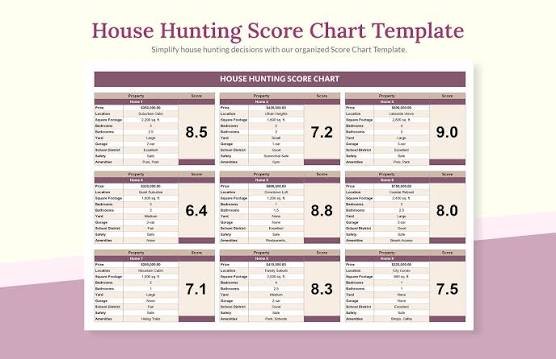
An example of a structured house hunting score chart template used to compare properties during real estate walkthroughs. This visual tool helps home buyers organize notes, evaluate features, and rate houses systematically.
Frequently Asked Questions (FAQ)
Can you open closets and kitchen cabinets during an open house in Halifax?
Yes. Kitchen cabinets, pantry doors, hall closets, and built-in storage are considered real property fixtures. Buyers are fully entitled to open built-in storage to assess space capacity. However, freestanding furniture like dressers and nightstands are strictly off-limits.
Are sellers allowed to record audio during home viewings in Nova Scotia?
Many homes feature active smart home security systems, such as Ring or Nest devices, that capture both video and audio. Buyers should always operate under the assumption that conversations on the property may be recorded.
How long does a home viewing usually last?
Standard private viewings in the Halifax market are typically booked in 30- to 60-minute increments through the MLS showing service.
Ready to Start Your Halifax Home Search?
Navigating home tours with a clear eye for red flags and proper etiquette keeps your search efficient and protects your financial position.
If you are preparing to buy your first home in Halifax, Dartmouth, Bedford, or surrounding areas, reach out to our team today to get set up with custom property alerts and expert guidance every step of the way!
