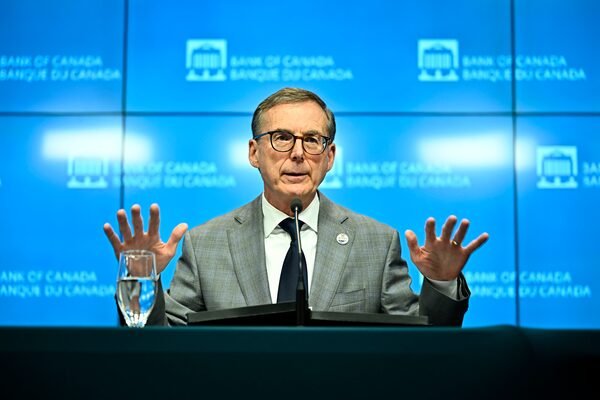
Bank of Canada Governor Tiff Macklem delivering a official press conference update regarding key interest rate decisions and Canadian economic policy.
The era of cheap, holding mortgage rates in Canada is officially over, as the Bank of Canada just made its move.
On October 28, 2026, the central bank announced a 0.25% increase to its key policy interest rate, raising it from 2.25% to 2.50%. If you hold a variable-rate mortgage in Halifax, Bedford, Dartmouth, or across HRM, your monthly payments are about to jump starting with your very next statement. And if you are on a fixed rate, a massive renewal wall is quietly building in the background.
In this article, we break down the exact numbers, how local Halifax home prices align with these payment changes, and what strategic steps Nova Scotia property owners must take immediately.
Why the Bank of Canada Raised Rates to 2.50%
The Bank of Canada ended months of a holding pattern by raising the target overnight rate by 25 basis points (0.25 percentage points). This pushes the key policy rate up to 2.50%, which in turn pushes commercial prime lending rates across major Canadian banks from 4.45% up to 4.70%.
According to the Bank of Canada's Monetary Policy Report, persistent core inflation pressures and steady economic resilience mean interest rates need to stay slightly higher for longer. Bank of Canada Governor Tiff Macklem noted that while headline inflation has hovered near target ranges, underlying core inflation metrics remain stickier than projected.
The Variable-Rate Breakdown: How Much More Will Halifax Homeowners Pay?
Because variable mortgage rates track prime rates directly, any adjustment from the central bank flows through to variable-rate loans almost immediately.
As a general benchmark: A 0.25% rate increase adds approximately $13.50 to $14.00 per month for every $100,000 of mortgage debt on a standard 25-year amortization schedule.
With average residential benchmark home prices in the Halifax Regional Municipality (HRM) sitting near $541,700 to $585,000, here is how the math breaks down by balance:
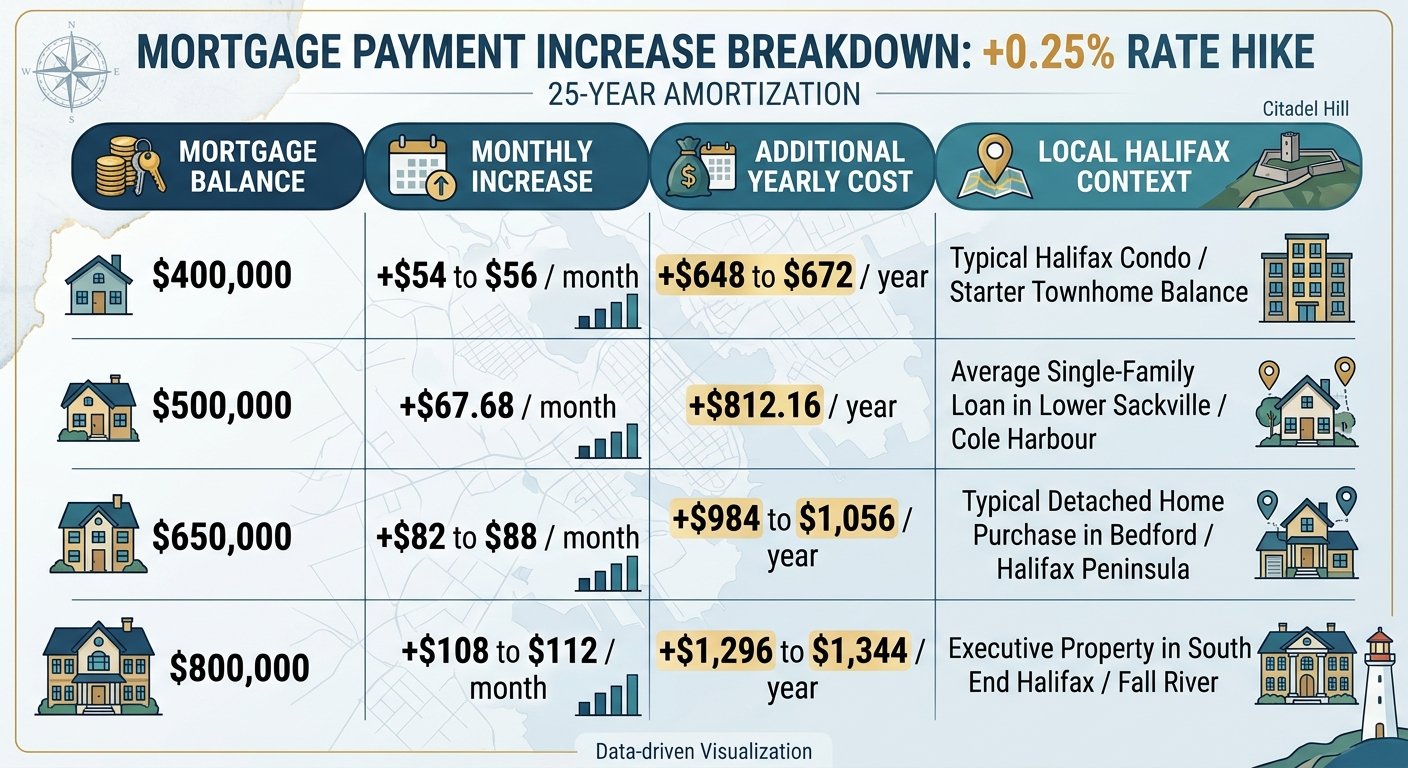
Infographic breakdown detailing how a 0.25% Bank of Canada interest rate increase impacts monthly mortgage payments across Halifax, Bedford, and Dartmouth home prices.
Adjustable vs. Fixed-Payment Variable Mortgages in Nova Scotia
How this rate increase lands on your finances depends heavily on your specific variable mortgage structure:
Adjustable Rate Mortgage (ARM): Your monthly dollar payment increases automatically on your next withdrawal. While your cash out-of-pocket goes up, your original payoff schedule (amortization) stays intact.
Variable Rate Mortgage with Fixed Payments (VRM): Your total monthly dollar amount remains the same, but a higher portion of your payment covers interest rather than loan principal. This extends your loan timeline and moves you closer to your trigger rate, the threshold where your payment fails to cover accumulating interest.
What This Announcement Means for Fixed-Rate Mortgages
If you locked in a fixed-rate mortgage, your current monthly payments will not change today. Your contract rate remains locked until your term expires.
However, Halifax homeowners with fixed rates still need to plan for two core market dynamics:
Bond Yield Trajectory: Fixed mortgage rates are priced off Government of Canada 5-year bond yields, not the Bank of Canada overnight rate. Bond yields typically price in inflation expectations ahead of central bank announcements.
The Impending Renewal Wall: Homeowners who secured historically low fixed rates (around 2% to 3%) during 2021 or 2022 and face renewals in late 2026 or 2027 will transition into a higher rate environment, resulting in payment increases at renewal time.
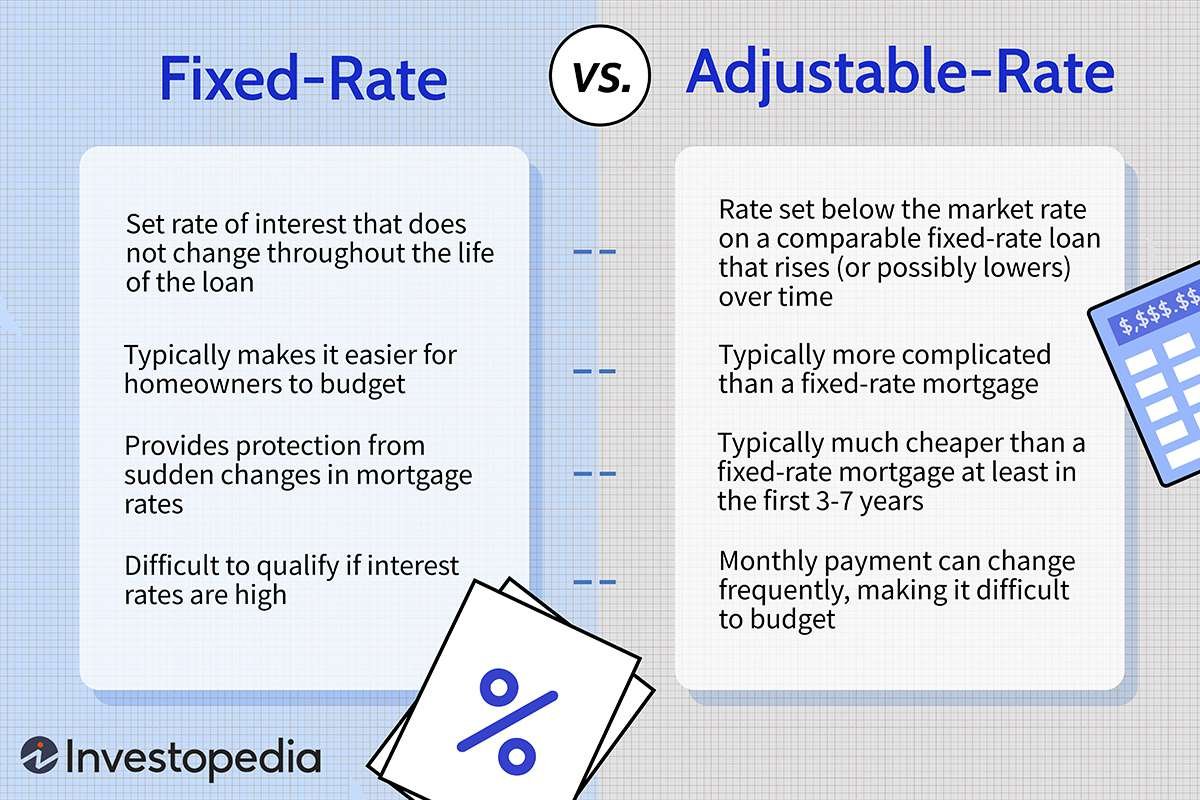
A side-by-side breakdown comparing fixed-rate and adjustable-rate mortgages, highlighting budget predictability, interest rate flexibility, and qualifying requirements.
Frequently Asked Questions (FAQ)
1. How does the October 2026 Bank of Canada rate hike affect Halifax home prices?
Higher interest rates compress buyer purchasing power. While inventory in Halifax-Dartmouth has stabilized, elevated borrowing costs typically moderate rapid price appreciation, keeping local price growth steady rather than aggressive.
2. When will I see the 0.25% increase on my variable mortgage statement?
Major Canadian banks adjust their prime rate within 24 to 48 hours of a Bank of Canada policy change. For Adjustable Rate Mortgage (ARM) holders, payment adjustments take effect on your next scheduled billing date.
3. Should Halifax homeowners switch from a variable rate to a fixed rate right now?
Locking in depends on your risk tolerance and remaining term. Fixed rates offer payment predictability, but converting a variable rate today locks in current yield levels. Consult a licensed Nova Scotia mortgage broker to run penalty and interest comparisons.
4. What happens if I hit my mortgage trigger rate in Nova Scotia?
If you hold a fixed-payment variable mortgage and hit your trigger rate, your financial institution will contact you to increase your regular payment, make a lump-sum principal payment, or re-amortize the remaining balance.
Strategic Action Steps for Local Property Owners
Identify Your Mortgage Structure: Confirm whether your loan is an Adjustable Rate Mortgage (ARM), a Variable Rate Mortgage (VRM), or a Fixed-Rate contract.
Adjust Your Budget Buffer: Plan for an extra $14/month per $100,000 of mortgage debt to maintain budget elasticity.
Review Upcoming Renewals: If your mortgage term expires within the next 120 days, lock in a rate hold with your lender or broker immediately to hedge against further volatility.
📞 TAKE CONTROL OF YOUR MORTGAGE STRATEGY
Navigating interest rate shifts in the Halifax real estate market requires clear numbers and tailored advice.
Have questions about your mortgage renewal or variable rate payments in Nova Scotia?
👉 Contact Me Today so I can connect you with a mortgage broker. Leave a comment below with your thoughts on the latest Bank of Canada decision!
