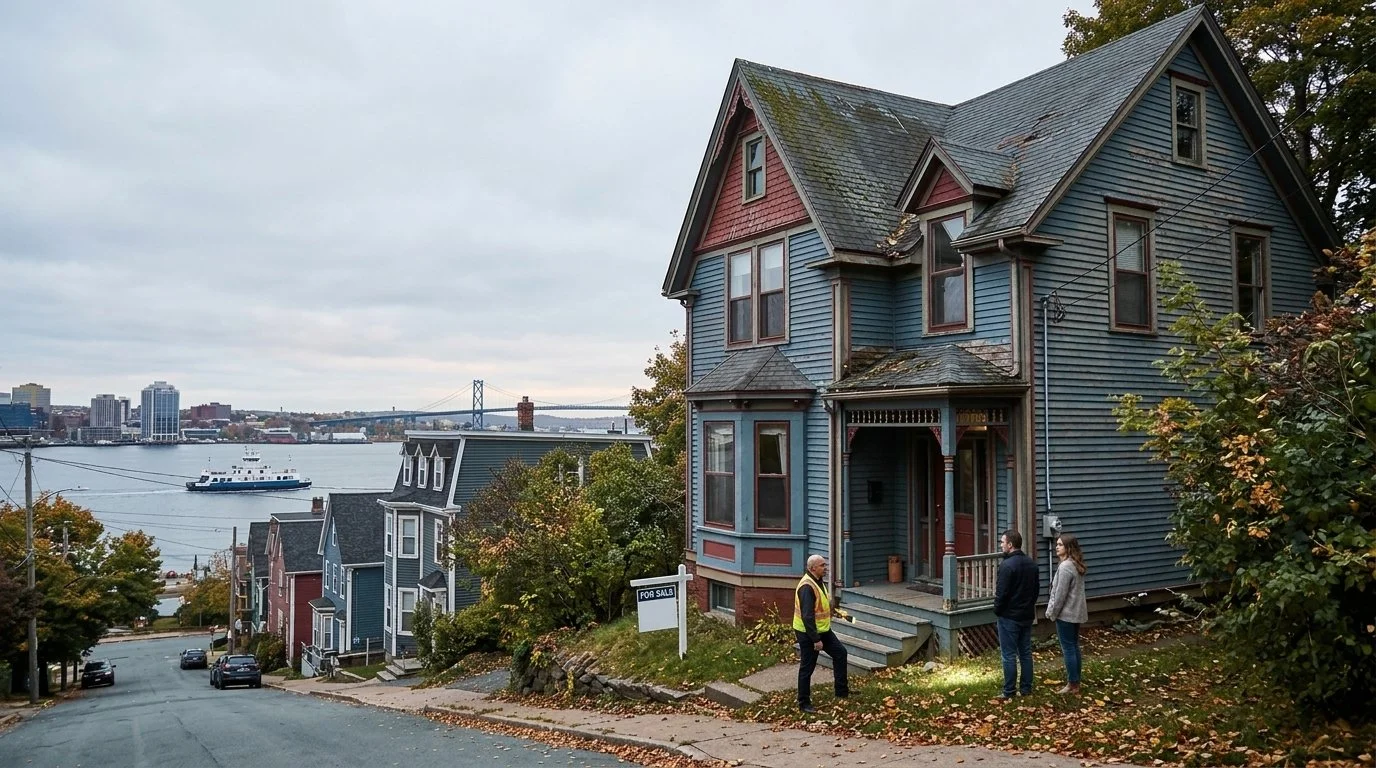
A home inspector points out exterior wear on an older Halifax home listed for sale as is, where is, with the Halifax Harbour and ferry in the background.
In Halifax real estate, an "as is, where is" clause means the buyer agrees to purchase the property in its exact current physical and legal condition at the time of closing. The seller makes no warranties or promises regarding the state of the home, and they will not pay for repairs, renovations, or cleanup before handing over the keys.
When you buy a property "as is, where is" in Nova Scotia, you assume full responsibility for any existing issues, whether they are obvious cosmetic flaws or underlying structural problems.
Why Do Halifax Sellers Use This Clause?
Seeing an "as is, where is" clause on a ViewPoint listing or MLS sheet does not automatically mean the house is falling apart. In the Halifax Regional Municipality (HRM), this clause commonly appears in a few specific situations:
Estate Sales: When heirs inherit a family home in neighborhoods like the South End, Dartmouth, or Bedford, they often have never lived in the property. Because they do not know the home's repair history, they sell it "as is" to limit their liability.
Foreclosures and Lender Sales: Banks and lenders selling repossessed properties rarely have firsthand knowledge of the building's condition and will almost always use strict "as is" language.
Fixer-Uppers and Older Homes: Halifax has an aging housing stock, including century homes on the Peninsula and older bungalows in Spryfield or Cole Harbour. Sellers who do not want to invest in updating outdated electrical (like knob-and-tube), old oil tanks, or aging roofs often price the home accordingly and sell it "as is."
Absentee Landlords: Out-of-province investors selling rental properties in Halifax frequently use this clause because they have not personally maintained or occupied the building.
What "As Is, Where Is" Does (and Does Not) Protect in Nova Scotia
A common misconception in Nova Scotia real estate is that an "as is" clause gives a seller a free pass to hide major problems. Under Nova Scotia common law and the Nova Scotia Real Estate Commission (NSREC) guidelines, legal protections still apply.
1. Patent vs. Latent Defects
Patent Defects (Visible): These are problems a buyer can spot during a reasonable walkthrough or standard inspection, such as a cracked window, a missing handrail, or water stains on a ceiling. An "as is" clause transfers 100% of the responsibility for patent defects to the buyer.
Latent Defects (Hidden): These are serious, hidden issues that make a home uninhabitable or dangerous, which a buyer could not discover through a normal inspection (for example, a hidden foundation issue covered by fresh drywall or a buried, leaking oil tank). Even in an "as is" sale, a seller cannot actively conceal a known latent defect or lie about it if asked directly.
2. The Property Disclosure Statement (PDS)
In a standard Halifax home sale, the seller fills out a Property Disclosure Statement detailing what they know about the home's history, roof, plumbing, and past flooding. In an "as is, where is" transaction, the seller will typically refuse to provide a PDS, stating they have no knowledge of the property's history.
3. Financing and Insurance Hurdles
Even if you are willing to buy a property "as is," your mortgage lender and home insurance provider might have strict rules. In Nova Scotia, insurance companies are particularly strict about fiberglass oil tanks past their expiry date, aluminum wiring, and galvanized plumbing. If a home is uninsurable, your lender will not fund the mortgage, regardless of whether you agreed to buy it "as is."
Can You Still Get a Home Inspection on an "As Is" Property?
Yes. Buying a home "as is, where is" does not mean you have to waive your right to a home inspection.
Unless you deliberately submit an unconditional offer, your REALTOR® can still include a standard inspection condition in your Nova Scotia Agreement of Purchase and Sale. The difference is how you use the inspection results:
In a standard sale, you might use an inspection report to negotiate a price reduction or ask the seller to fix a leaky roof before closing.
In an "as is" sale, the seller is signaling upfront that they will not make repairs. Your inspection is strictly for your own peace of mind so you can walk away from the deal if the repair costs are higher than your budget allows.
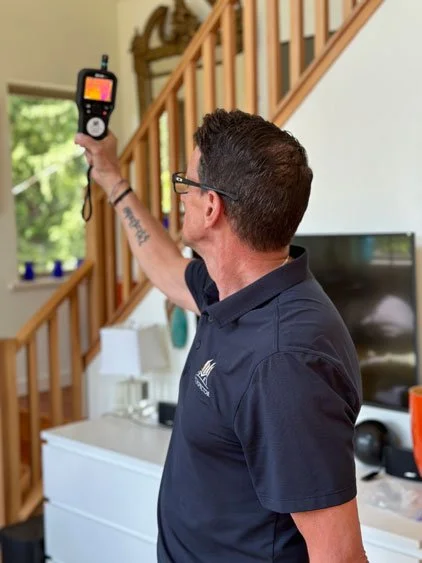
A Halifax home inspector uses a handheld thermal imaging camera to check for hidden moisture and latent defects inside a residential property.
Frequently Asked Questions (FAQ)
1. Does "as is, where is" mean the seller can leave garbage and old furniture behind? Yes, unless your contract specifies otherwise. The "where is" part of the clause means you accept the property in its exact current state, which can include abandoned furniture, basement clutter, or debris in the yard. If you want the property swept clean, your agent must write a specific clause into the Agreement of Purchase and Sale requiring the seller to remove all chattels and debris prior to closing.
2. Is it risky to buy an "as is" home in Halifax? It carries higher financial risk because you do not get a Property Disclosure Statement, and you are taking on unknown repair costs. However, if you factor a large renovation contingency into your budget, hire a thorough Halifax home inspector, and confirm you can get property insurance before waiving your conditions, it can be a great way to build equity in high-demand neighborhoods.
3. Can I sue a seller in Nova Scotia if I find a major problem after buying a house "as is"? Generally, no. Once the deal closes, the rule of caveat emptor ("buyer beware") applies strongly to "as is" sales. The only exception is if you can prove in court that the seller committed fraud by actively hiding a dangerous latent defect or deliberately lying to you about a known issue prior to closing.
4. How should an "as is" property be priced compared to move-in-ready homes in HRM? An "as is" property should be priced below comparable turnkey homes in the same neighborhood to reflect the cost of immediate repairs, the lack of seller warranties, and the inconvenience of managing renovations. A local Halifax real estate agent can run a Comparative Market Analysis (CMA) to help you determine if the discount actually covers the true cost of the work needed.
Thinking About Buying or Selling in Halifax?
Navigating an "as is, where is" contract requires a sharp eye for detail and a solid understanding of Nova Scotia real estate law. Whether you are evaluating an older fixer-upper on the Halifax Peninsula or preparing to sell an estate property in Dartmouth or Bedford, having the right strategy protects your wallet and keeps your transaction on track.
Ready to make your next move in Halifax? Reach out today for a no-pressure consultation. Let's review your goals, look at the numbers, and build a clear plan for your next real estate transaction.
